Info@birminghamphysiocare.co.uk
01213300272
+447743087832
650 Pershore Road, Birmingham, B29 7NX

- Clinic Overview
- TREATMENTS
- Manual Therapy
- Shockwave Therapy
- Low Level Laser Therapy (LLLT)
- Musculoskeletal MSK Ultrasound
- Ultrasound-Guided Injections
- Sports Massage
- Sports Injury Rehabilitation
- Post-Surgical & Injury Rehabilitation
- Chronic Pain Management
- Cupping Therapy
- Acupuncture & Dry Needling
- Workplace Assessments
- Exercise Rehabilitation
- MUSCULOSKELETAL
- NEUROLOGICAL
- ORTHOPAEDIC
- ELDERLY
- SPORTS
- HOME VISITS
- Pricing
- Contact Us
- Blogs & Case Studies

Professional Domiciliary Physiotherapy Services Delivered to Your Door Step
- Clinic Overview
- TREATMENTS
- Manual Therapy
- Shockwave Therapy
- Low Level Laser Therapy (LLLT)
- Musculoskeletal MSK Ultrasound
- Ultrasound-Guided Injections
- Sports Massage
- Sports Injury Rehabilitation
- Post-Surgical & Injury Rehabilitation
- Chronic Pain Management
- Cupping Therapy
- Acupuncture & Dry Needling
- Workplace Assessments
- Exercise Rehabilitation
- MUSCULOSKELETAL
- NEUROLOGICAL
- ORTHOPAEDIC
- ELDERLY
- SPORTS
- HOME VISITS
- Pricing
- Contact Us
- Blogs & Case Studies
- Clinic Overview
- TREATMENTS
- Manual Therapy
- Shockwave Therapy
- Low Level Laser Therapy (LLLT)
- Musculoskeletal MSK Ultrasound
- Ultrasound-Guided Injections
- Sports Massage
- Sports Injury Rehabilitation
- Post-Surgical & Injury Rehabilitation
- Chronic Pain Management
- Cupping Therapy
- Acupuncture & Dry Needling
- Workplace Assessments
- Exercise Rehabilitation
- MUSCULOSKELETAL
- NEUROLOGICAL
- ORTHOPAEDIC
- ELDERLY
- SPORTS
- HOME VISITS
- Pricing
- Contact Us
- Blogs & Case Studies
SHOULDER SURGERY REHABILITATION · BIRMINGHAM PHYSIOCARE
Shoulder Surgery Fixes The Structure. Rehabilitation Gives You The Function Back.
Shoulder surgery covers a broad range of procedures rotator cuff repair, labral reconstruction, shoulder stabilisation, subacromial decompression and shoulder replacement and each one demands a completely different rehabilitation approach. The tissue repaired during a rotator cuff surgery requires strict protection in the first six weeks. A stabilisation procedure requires progressive challenge to the repaired structures. A shoulder replacement follows a different precaution and loading protocol entirely. Applying a standard shoulder rehabilitation programme across all of these procedures is one of the most common reasons post-surgical shoulder recovery stalls.
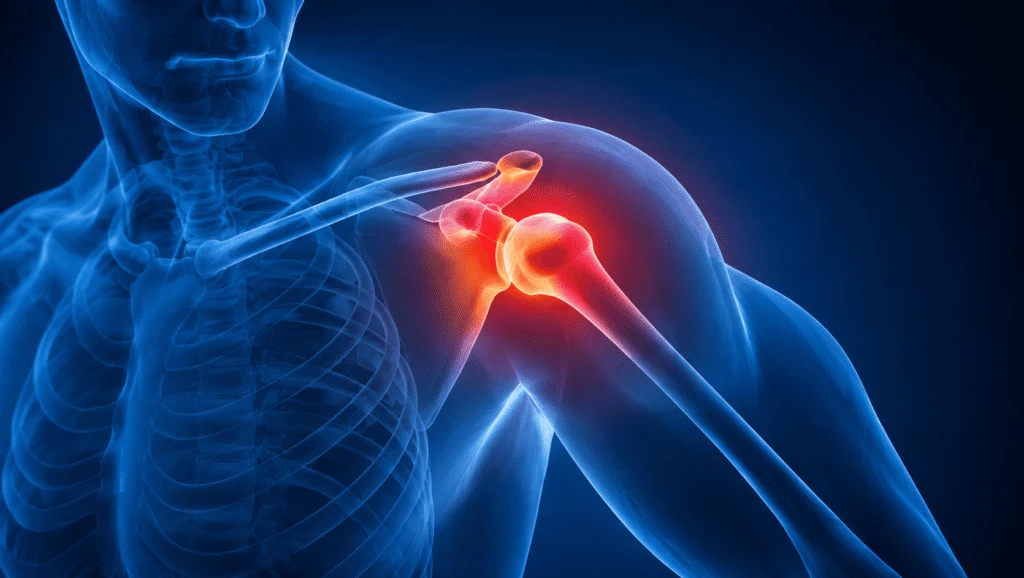
At Birmingham Physiocare Ltd on Pershore Road in Birmingham, shoulder surgery rehabilitation is built around your specific procedure, your consultant’s post-operative protocol and the biological timeline of the tissue being rehabilitated. We work closely with your surgical team, respect the protection phases that repaired tissue requires, and progress rehabilitation systematically through each stage from the initial sling phase through to full functional restoration and return to sport or occupation.
We treat at our clinic and through our domiciliary home visit service across Birmingham, Harborne, Edgbaston, Selly Oak, Moseley, Sutton Coldfield, Solihull and the wider West Midlands.
The shoulder is the most mobile joint in the body and restoring that mobility safely after surgery, without compromising the repaired structure, requires precise staging of every rehabilitation element.
Procedures we rehabilitate
- Rotator cuff repair: The repaired tendon requires strict protection through the initial six-week healing phase. Pendular exercises and passive movement maintain tissue mobility without loading the repair, followed by progressive active strengthening from six weeks onwards with consultant clearance.
- Labral repair and shoulder stabilisation: Anterior and posterior labral repairs and Bankart procedures require progressive challenge after initial protection. The goal is restoring full range of movement while rebuilding dynamic muscular stability.
- Subacromial decompression: Typically allows a faster rehabilitation progression than soft tissue repairs. Range of movement and strengthening begin earlier, focusing on addressing the rotator cuff weakness and scapular control deficits.
- Shoulder replacement: Total and reverse shoulder replacements follow specific protocols. Reverse shoulder replacements require particular attention to the altered biomechanics of the joint and its deltoid-dependent function.
- Acromioclavicular joint reconstruction: Progressive rehabilitation of shoulder range of movement and periscapular strengthening following AC joint stabilisation procedures.
Get in touch with us
service timing ( Mon to Fri )
09 Am To 6 Pm
service timing ( Sat to Sun )
10:30 Am To 5 Pm
Our Services
Birmingham Physiocare In a nutshell
What Makes Birmingham Physiocare Different?
Book Your Physiotherapy Assessment!
How We Treat Shoulder Replacement Rehabilitation At Birmingham Physiocare
SHOULDER REHAB
BIRMINGHAM PHYSIOCARE
Protocol-Compliant
Exercise Rehab
Manual Therapy
Home Care
Consultant-Aligned
Protocol-compliant rehabilitation
Every shoulder surgery rehabilitation programme at Birmingham Physiocare begins with a review of your consultant's specific post-operative protocol. We do not progress rehabilitation beyond the parameters your surgeon has set.
Where we do not have your protocol, we contact your surgical team directly to obtain it before your first session.
Criteria-Based Stages
Exercise rehabilitation
Staged strengthening beginning with periscapular muscle activation and progressing to rotator cuff loading, shoulder press and full upper limb functional strengthening as tissue healing and consultant clearance allow.
Each stage is criteria-based rather than time-based. You progress when your tissue is ready, not when a fixed number of weeks has elapsed.
Mechanical Alignment
Manual therapy
Glenohumeral joint mobilisation for restricted range of movement, soft tissue techniques for scar tissue and post-surgical capsular tightness, and cervicothoracic assessment and treatment where spinal stiffness is contributing to altered shoulder mechanics during rehabilitation.
Sling Phase Support
Home visit rehabilitation through our domiciliary service
Particularly useful in the sling phase when clinic attendance is difficult and early pendular and passive range of movement exercises need to begin correctly from the outset.
We visit your home, guide you through the correct early exercises and ensure your home environment supports safe post-surgical recovery.
Commonly Asked Questions About SHOULDER REPLACEMENT REHABILITATION
Essential FAQs
Sling duration varies depending on the size of the rotator cuff tear repaired and your surgeon's specific protocol typically four to six weeks for smaller tears and up to eight weeks for larger or more complex repairs. During this period, pendular exercises and gravity-assisted range of movement are typically permitted from the first or second week post-surgery to maintain tissue mobility without loading the repair. Your physiotherapist at Birmingham Physiocare guides you through these exercises precisely during the sling phase ensuring the repair is protected while preventing the stiffness that develops rapidly when a shoulder is completely immobilised.
The rotator cuff tendons have a relatively poor blood supply compared to other musculoskeletal structures, which slows the biological healing process. A repaired rotator cuff tendon takes a minimum of twelve weeks to achieve sufficient structural integrity for progressive loading to begin safely and full maturation of the repair takes six to twelve months. Progressing rehabilitation too quickly risks re-tearing the repair. Progressing too slowly allows stiffness and muscle atrophy to develop that then require additional rehabilitation time to reverse. The precise staging of rehabilitation based on biological healing timelines rather than symptom improvement alone is the most important clinical skill in shoulder surgery rehabilitation.
Some degree of post-surgical stiffness is a normal part of healing the inflammatory response produces scar tissue that temporarily reduces mobility before rehabilitation reverses it. Stiffness that persists beyond the expected timeline, or that is significantly limiting daily function, may indicate the development of post-surgical adhesive capsulitis a known complication of shoulder surgery that occurs more frequently in patients who have not received sufficiently early and consistent physiotherapy. Manual therapy and progressive range of movement exercises are the primary treatment for post-surgical shoulder stiffness. The earlier it is addressed, the more straightforwardly it resolves.
Yes, significantly. Total shoulder replacement and reverse shoulder replacement each follow their own specific rehabilitation pathway. Reverse shoulder replacement is particularly distinct because the mechanics of the joint are fundamentally changed the deltoid becomes the primary mover rather than the rotator cuff, and rehabilitation must build deltoid strength and endurance as the primary functional priority rather than rotator cuff strengthening. Your physiotherapist at Birmingham Physiocare will obtain your specific post-operative protocol from your surgical team and build your programme around the precise requirements of the procedure you have had.
📍 Same-Day Appointments
Recovering from Shoulder Surgery? In Birmingham
Get expert assessment and diagnosis at our clinic on 650 Pershore Road, B29 7NX or in the comfort of your own home across Birmingham & the West Midlands.
✓ No GP referral required
✓ Direct specialist access
✓ Same-week appointments
Call us now — speak to a physio
0121 330 0272
or
Book Your Appointment
Instant confirmation • Free parking