Info@birminghamphysiocare.co.uk
01213300272
+447743087832
650 Pershore Road, Birmingham, B29 7NX

- Clinic Overview
- TREATMENTS
- Manual Therapy
- Shockwave Therapy
- Low Level Laser Therapy (LLLT)
- Musculoskeletal MSK Ultrasound
- Ultrasound-Guided Injections
- Sports Massage
- Sports Injury Rehabilitation
- Post-Surgical & Injury Rehabilitation
- Chronic Pain Management
- Cupping Therapy
- Acupuncture & Dry Needling
- Workplace Assessments
- Exercise Rehabilitation
- MUSCULOSKELETAL
- NEUROLOGICAL
- ORTHOPAEDIC
- ELDERLY
- SPORTS
- HOME VISITS
- Pricing
- Contact Us
- Blogs & Case Studies

Professional Domiciliary Physiotherapy Services Delivered to Your Door Step
- Clinic Overview
- TREATMENTS
- Manual Therapy
- Shockwave Therapy
- Low Level Laser Therapy (LLLT)
- Musculoskeletal MSK Ultrasound
- Ultrasound-Guided Injections
- Sports Massage
- Sports Injury Rehabilitation
- Post-Surgical & Injury Rehabilitation
- Chronic Pain Management
- Cupping Therapy
- Acupuncture & Dry Needling
- Workplace Assessments
- Exercise Rehabilitation
- MUSCULOSKELETAL
- NEUROLOGICAL
- ORTHOPAEDIC
- ELDERLY
- SPORTS
- HOME VISITS
- Pricing
- Contact Us
- Blogs & Case Studies
- Clinic Overview
- TREATMENTS
- Manual Therapy
- Shockwave Therapy
- Low Level Laser Therapy (LLLT)
- Musculoskeletal MSK Ultrasound
- Ultrasound-Guided Injections
- Sports Massage
- Sports Injury Rehabilitation
- Post-Surgical & Injury Rehabilitation
- Chronic Pain Management
- Cupping Therapy
- Acupuncture & Dry Needling
- Workplace Assessments
- Exercise Rehabilitation
- MUSCULOSKELETAL
- NEUROLOGICAL
- ORTHOPAEDIC
- ELDERLY
- SPORTS
- HOME VISITS
- Pricing
- Contact Us
- Blogs & Case Studies
KNEE REPLACEMENT REHABILITATION · BIRMINGHAM PHYSIOCARE
A New Knee Needs A New Programme. Not A Generic Exercise Sheet
Knee replacement surgery addresses the joint. It does not address the quadriceps inhibition that surgery itself causes, the flexion deficit that develops rapidly without targeted rehabilitation, or the altered gait mechanics that become habitual when patients have been walking on a painful knee for years before the procedure. These are the factors that determine whether a patient achieves the full benefit of their new joint and they are all directly addressed by specialist post-operative physiotherapy beginning in the first days after discharge
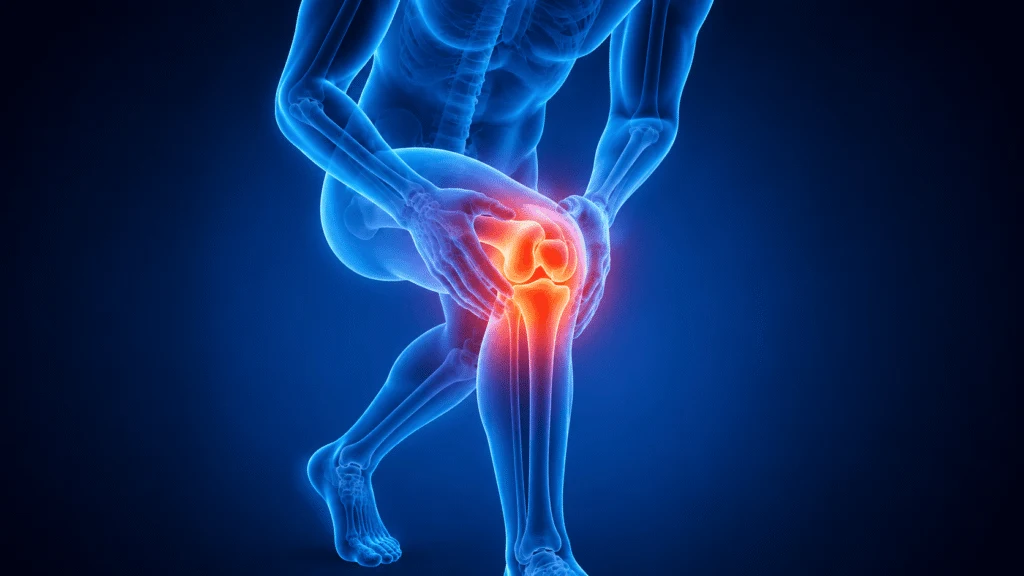
At Birmingham Physiocare Ltd on Pershore Road in Birmingham, knee replacement rehabilitation is structured around the specific demands of the procedure total knee replacement, partial knee replacement and revision surgery each presenting different rehabilitation challenges that a generic post-operative programme does not account for. We work within your consultant’s protocol, begin rehabilitation from the point of discharge, and progress the programme systematically through each phase of recovery.
We treat at our clinic and through our domiciliary home visit service across Birmingham, Harborne, Edgbaston, Selly Oak, Moseley, Sutton Coldfield, Solihull and the wider West Midlands.
Early stage: weeks one to six
- Swelling management through elevation, ice and early movement. Persistent swelling is the primary inhibitor of quadriceps activation after knee replacement.
- Quadriceps setting and straight leg raises restoring the muscle activation that surgery itself temporarily disrupts.
- Knee flexion and extension range of movement progressive work toward the flexion targets needed for sitting comfortably and climbing stairs.
- Safe weight-bearing and walking with aids gait training to promote normal movement patterns from the earliest possible stage.
- Transfer training and stair management appropriate to your home environment.
Progressive stage: weeks six to twelve
- Progressive quadriceps and hamstring strengthening building the muscular support the knee replacement relies on for stability.
- Gait re-education and limp correction addressing compensatory movement patterns that develop before and after surgery.
- Balance and proprioceptive training as the new joint lacks the nerve endings of the native knee, making rehabilitation essential for dynamic stability.
- Functional activity progression including stairs without support, inclines, uneven surfaces and distance walking.
Return to function: three months onwards
- Return to driving, work and leisure activities in a structured, progressive sequence.
- Sport and recreation rehabilitation where appropriate such as cycling, swimming, golf and low-impact activity return.
- Long-term strengthening and home exercise programme for ongoing joint health and protection.
Get in touch with us
service timing ( Mon to Fri )
09 Am To 6 Pm
service timing ( Sat to Sun )
10:30 Am To 5 Pm
Our Services
Birmingham Physiocare In a nutshell
What Makes Birmingham Physiocare Different?
Book Your Physiotherapy Assessment!
How We Treat Knee Replacement Rehabilitation At Birmingham Physiocare
KNEE REHAB HUB
BIRMINGHAM PHYSIOCARE
Exercise Rehab
Manual Therapy
Home Care
Prehabilitation
Load-Progressive Approach
Exercise rehabilitation
Progressive quadriceps, hamstring and hip strengthening designed around the specific demands of your procedure and your current recovery phase.
Quadriceps rehabilitation after knee replacement requires a systematic, load-progressive approach. Arthrogenic muscle inhibition means the muscle does not activate normally in the early post-surgical period, and addressing this requires specific exercise selection that a generic programme frequently misses.
Range Restoration
Manual therapy
Patellar mobilisation to prevent the infrapatellar contracture that limits flexion recovery, tibiofemoral joint mobilisation for restricted range of movement, soft tissue techniques for scar tissue and surrounding muscular tightness, and lumbar assessment where compensatory patterns have produced secondary spinal symptoms.
Early Mobility Support
Home visit rehabilitation through our domiciliary service
Particularly valuable in the first weeks after knee replacement when getting in and out of a car remains uncomfortable and the risk of falls on unfamiliar ground is a genuine concern.
We bring rehabilitation to your home, begin your programme immediately from discharge and assess your home environment for safety and appropriate equipment.
Pre-Surgical Recovery
Prehabilitation
Pre-surgical quadriceps strengthening for planned knee replacement directly improves post-operative flexion recovery, reduces hospital stay duration and accelerates the timeline to independent function.
Contact us before your surgery date to arrange a prehab programme.
Commonly Asked Questions About KNEE REPLACEMENT REHABILITATION
Essential FAQs
Achieving 90 degrees of knee flexion within the first two weeks of surgery is the primary early rehabilitation target this is the minimum needed for safe stair climbing and comfortable sitting. Most patients work toward 110 to 120 degrees over the following weeks, which is sufficient for the majority of daily activities. Maximum flexion recovery typically occurs within the first three months, after which scar tissue maturation makes further gains significantly harder to achieve. This is why early, intensive physiotherapy in the first six weeks after surgery is so important the window for flexion recovery is time-sensitive and does not stay open indefinitely.
Quadriceps weakness after knee replacement is caused by arthrogenic muscle inhibition a neurological response to joint swelling and trauma that reduces the brain's ability to activate the quadriceps voluntarily, regardless of the patient's effort. This is not a normal muscle weakness that resolves with rest. It requires specific exercises that target the inhibited motor pathways quadriceps setting, neuromuscular electrical stimulation where indicated, and progressive loading that gradually overcomes the inhibition. Without targeted rehabilitation, arthrogenic muscle inhibition persists long after the surgical wound has healed and is the primary reason for persistent weakness and instability months after surgery.
Not necessarily though the rehabilitation approach at this stage is different. Mature scar tissue requires sustained, progressive mobilisation and soft tissue techniques rather than the exercise-led approach of early rehabilitation. Manual therapy to mobilise the patella and tibiofemoral joint, combined with progressive flexion exercises and consistent home practice, can still produce meaningful improvement in flexion range up to twelve months post-surgery in patients who have not received adequate early rehabilitation. A thorough assessment at Birmingham Physiocare will establish what restriction is present, what is causing it and what a targeted programme can realistically achieve at this stage.
Partial knee replacement unicompartmental replacement preserves more of the native knee tissue, typically produces less post-operative pain and swelling, and allows a faster early rehabilitation progression than total knee replacement. The flexion targets are similar but achieved more quickly, and the risk of arthrogenic muscle inhibition is lower. Total knee replacement involves more extensive tissue disruption and requires a more conservative early progression with closer attention to swelling management and muscle re-activation. Revision knee surgery replacing a failed primary replacement presents the most complex rehabilitation demands and requires the most individualised approach of all three procedures.
📍 Same-Day Appointments
Recovering from Knee Replacement Surgery? In Birmingham
Get expert assessment and diagnosis at our clinic on 650 Pershore Road, B29 7NX or in the comfort of your own home across Birmingham & the West Midlands.
✓ No GP referral required
✓ Direct specialist access
✓ Same-week appointments
Call us now — speak to a physio
0121 330 0272
or
Book Your Appointment
Instant confirmation • Free parking