Info@birminghamphysiocare.co.uk
01213300272
+447743087832
650 Pershore Road, Birmingham, B29 7NX

- Clinic Overview
- TREATMENTS
- Manual Therapy
- Shockwave Therapy
- Low Level Laser Therapy (LLLT)
- Musculoskeletal MSK Ultrasound
- Ultrasound-Guided Injections
- Sports Massage
- Sports Injury Rehabilitation
- Post-Surgical & Injury Rehabilitation
- Chronic Pain Management
- Cupping Therapy
- Acupuncture & Dry Needling
- Workplace Assessments
- Exercise Rehabilitation
- MUSCULOSKELETAL
- NEUROLOGICAL
- ORTHOPAEDIC
- ELDERLY
- SPORTS
- HOME VISITS
- Pricing
- Contact Us
- Blogs & Case Studies

Professional Domiciliary Physiotherapy Services Delivered to Your Door Step
- Clinic Overview
- TREATMENTS
- Manual Therapy
- Shockwave Therapy
- Low Level Laser Therapy (LLLT)
- Musculoskeletal MSK Ultrasound
- Ultrasound-Guided Injections
- Sports Massage
- Sports Injury Rehabilitation
- Post-Surgical & Injury Rehabilitation
- Chronic Pain Management
- Cupping Therapy
- Acupuncture & Dry Needling
- Workplace Assessments
- Exercise Rehabilitation
- MUSCULOSKELETAL
- NEUROLOGICAL
- ORTHOPAEDIC
- ELDERLY
- SPORTS
- HOME VISITS
- Pricing
- Contact Us
- Blogs & Case Studies
- Clinic Overview
- TREATMENTS
- Manual Therapy
- Shockwave Therapy
- Low Level Laser Therapy (LLLT)
- Musculoskeletal MSK Ultrasound
- Ultrasound-Guided Injections
- Sports Massage
- Sports Injury Rehabilitation
- Post-Surgical & Injury Rehabilitation
- Chronic Pain Management
- Cupping Therapy
- Acupuncture & Dry Needling
- Workplace Assessments
- Exercise Rehabilitation
- MUSCULOSKELETAL
- NEUROLOGICAL
- ORTHOPAEDIC
- ELDERLY
- SPORTS
- HOME VISITS
- Pricing
- Contact Us
- Blogs & Case Studies
TRAUMATIC BRAIN INJURY REHABILITATION · BIRMINGHAM PHYSIOCARE
The Brain That Survived The Injury Still Has The Power To Rebuild
A traumatic brain injury changes everything how you move, how you think, how you manage fatigue, and how much of daily life you can participate in independently. The physical consequences vary enormously depending on the location and severity of the injury, but what remains constant across every TBI presentation is the brain's capacity for neuroplasticity. New neural pathways can be formed. Lost function can be recovered. The extent of that recovery is not determined at the point of injury it is determined by the quality, consistency and specificity of rehabilitation that follows.
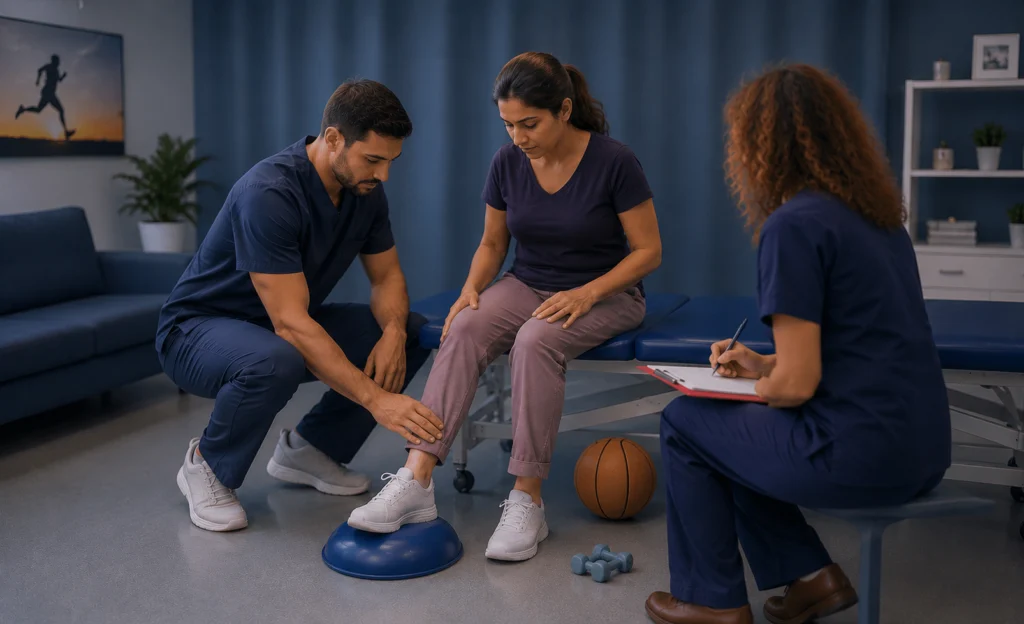
At Birmingham Physiocare Ltd on Pershore Road in Birmingham, our specialist neurological physiotherapists deliver TBI rehabilitation built on neuroplasticity principles and current 2025 INCOG rehabilitation guidelines. Every programme begins with a thorough assessment of the physical and cognitive factors affecting your function, and every session is directed at the specific deficits identified not a standard brain injury protocol applied regardless of how your injury has affected you individually. We work with patients at every stage of recovery, from early post-discharge rehabilitation through to patients with long-standing TBI whose progress has stalled under previous provision.
We treat at our clinic and through our domiciliary home visit service across Birmingham, Harborne, Edgbaston, Selly Oak, Moseley, Sutton Coldfield, Solihull and the wider West Midlands.
No two traumatic brain injuries are alike. The physical, cognitive and functional consequences depend entirely on which areas of the brain sustained damage and to what degree. These are the presentations our specialist physiotherapists assess and treat directly at Birmingham Physiocare.
Physical presentations we treat
- Weakness or paralysis affecting one or both sides of the body
- Impaired balance, coordination and postural control producing significant falls risk
- Altered gait pattern, reduced walking speed and difficulty navigating uneven ground
- Spasticity and increased muscle tone limiting range of movement and functional activity
- Difficulty with transfers, rising from chairs, managing stairs and daily mobility tasks
- Upper limb weakness and reduced hand function affecting self-care and daily tasks
- Post-traumatic fatigue limiting the capacity for activity and daily participation
- Headaches and dizziness affecting function and tolerance for activity
- Reduced sensation and proprioception affecting movement quality and safety awareness
Who we work with
- Recent Hospital Discharges: Patients recently discharged from hospital or inpatient rehabilitation who need continued specialist community physiotherapy.
- Long-term Recovery: Patients months or years post-TBI whose rehabilitation has plateaued or who have received insufficient specialist input.
- Home-Based Patients: Patients whose TBI has left them unable to attend a clinic, receiving rehabilitation through our domiciliary service.
- Families and Carers: Families and carers who need guidance on supporting rehabilitation and managing the physical presentation safely at home.
Get in touch with us
service timing ( Mon to Fri )
09 Am To 6 Pm
service timing ( Sat to Sun )
10:30 Am To 5 Pm
Our Services
Birmingham Physiocare In a nutshell
What Makes Birmingham Physiocare Different?
Book Your Physiotherapy Assessment!
How We Treat Traumatic Brain Injury At Birmingham Physiocare
TBI TREATMENT
HUB BIRMINGHAM PHYSIOCARE
HUB BIRMINGHAM PHYSIOCARE
Motor Rehab
Gait & Balance
Tone Mgmt
Upper Limb
Fatigue Mgmt
Home Visits
Neuroplasticity-Based
Neuroplasticity-based motor rehabilitation
High-repetition, task-specific movement practice targeting the precise functional deficits identified in your assessment. The evidence base for TBI rehabilitation confirms that function-induced recovery through activity practice and targeted environmental stimulation drives neuroplastic change at a neural level.
Practising the specific movements and functional tasks that the TBI has disrupted, consistently and with progressive difficulty, is the mechanism through which the brain forms new pathways to restore what was lost.
Safety & Confidence
Gait rehabilitation and balance training
Detailed assessment of your walking pattern and balance deficits, followed by targeted gait re-education, progressive balance training and dual-task practice that reflects the real demands of daily life.
Falls following TBI carry serious consequences and a systematic approach to balance rehabilitation directly reduces falls frequency and restores walking confidence.
Constraint Management
Spasticity and tone management
Hands-on techniques to reduce muscle tone in affected limbs, positioning strategies to prevent secondary complications, and progressive movement rehabilitation that works within the constraints of spasticity while systematically reducing its functional impact over time.
Cortical Reorganisation
Upper limb and functional task rehabilitation
Graded reaching, grasping and fine motor practice for the affected arm and hand, progressed from passive and active-assisted movement in more severe presentations through to functional task training as capacity improves.
Repetition and specificity are the clinical drivers of upper limb recovery after TBI.
Neurological Energy
Fatigue management
Post-traumatic fatigue is neurological in origin and requires intelligent management rather than rest alone. Your physiotherapist develops an activity pacing programme that preserves the energy needed for rehabilitation and daily function without triggering the fatigue cycles that derail recovery progress.
Domiciliary Care
Home visit rehabilitation through our domiciliary service
Specialist TBI rehabilitation delivered at your home for patients unable to attend the clinic. The home environment provides critical clinical information.
By observing the actual living space and real functional tasks, we identify specific barriers to independence that clinic-based rehabilitation cannot fully address.
Commonly Asked Questions About Traumatic Brain Injury
Essential FAQs
There is no fixed endpoint for TBI recovery. The most significant neurological recovery typically occurs in the first six to twelve months following injury when neuroplasticity is most active ; but meaningful functional progress continues well beyond this window with the right rehabilitation input. Patients who have been told their recovery has plateaued regularly achieve further gains at Birmingham Physiocare when specialist, neuroplasticity-based rehabilitation replaces the generic exercise provision that produced the apparent ceiling. The extent of long-term recovery is determined by the specificity and consistency of rehabilitation not by a fixed biological deadline.
Yes. Post-traumatic fatigue is one of the most functionally limiting consequences of TBI and one of the most poorly managed in standard community rehabilitation. It is not resolved by rest alone and it does not respond to the same approach as physical tiredness. Physiotherapy addresses fatigue through two mechanisms. Structured progressive exercise builds the physical capacity and cardiovascular fitness that reduces the energy cost of everyday movement. Activity pacing strategies developed with your physiotherapist restructure daily activity within your energy envelope, preventing the over-exertion and subsequent exhaustion cycle that keeps many TBI patients from making consistent rehabilitation progress.
Yes. Our domiciliary physiotherapy service delivers the same specialist TBI rehabilitation directly at home across Birmingham and the wider West Midlands. For patients with significant physical or cognitive impairment following TBI, the home visit model has specific clinical advantages beyond simple accessibility. We observe how the patient moves through their actual living environment, identify the real functional barriers, assess fall risks specific to the home layout and direct rehabilitation at the tasks that matter most in their daily life. Family members and carers are involved in every session with guidance on how to support the rehabilitation programme between visits.
Yes. The brain retains neuroplastic potential throughout life and functional recovery following TBI is not restricted to the acute phase. Patients years or even decades post-TBI can achieve meaningful improvements in motor function, walking, balance and daily independence when specialist rehabilitation is applied with the right specificity and frequency. Research confirms that function-induced recovery through targeted practice drives neuroplastic change regardless of the time elapsed since injury. If you or a family member sustained a TBI and have received little specialist rehabilitation input since, or if progress has stalled under current provision, a fresh assessment at Birmingham Physiocare will establish what rehabilitation potential remains and what a targeted programme can achieve.
📍 Same-Day Appointments
Looking for Traumatic Brain Injury Rehabilitation In Birmingham
Get expert assessment and diagnosis at our clinic on 650 Pershore Road, B29 7NX or in the comfort of your own home across Birmingham & the West Midlands.
✓ No GP referral required
✓ Direct specialist access
✓ Same-week appointments
Call us now — speak to a physio
0121 330 0272
or
Book Your Appointment
Instant confirmation • Free parking