Info@birminghamphysiocare.co.uk
01213300272
+447743087832
650 Pershore Road, Birmingham, B29 7NX

- Clinic Overview
- TREATMENTS
- Manual Therapy
- Shockwave Therapy
- Low Level Laser Therapy (LLLT)
- Musculoskeletal MSK Ultrasound
- Ultrasound-Guided Injections
- Sports Massage
- Sports Injury Rehabilitation
- Post-Surgical & Injury Rehabilitation
- Chronic Pain Management
- Cupping Therapy
- Acupuncture & Dry Needling
- Workplace Assessments
- Exercise Rehabilitation
- MUSCULOSKELETAL
- NEUROLOGICAL
- ORTHOPAEDIC
- ELDERLY
- SPORTS
- HOME VISITS
- Pricing
- Contact Us
- Blogs & Case Studies

Professional Domiciliary Physiotherapy Services Delivered to Your Door Step
- Clinic Overview
- TREATMENTS
- Manual Therapy
- Shockwave Therapy
- Low Level Laser Therapy (LLLT)
- Musculoskeletal MSK Ultrasound
- Ultrasound-Guided Injections
- Sports Massage
- Sports Injury Rehabilitation
- Post-Surgical & Injury Rehabilitation
- Chronic Pain Management
- Cupping Therapy
- Acupuncture & Dry Needling
- Workplace Assessments
- Exercise Rehabilitation
- MUSCULOSKELETAL
- NEUROLOGICAL
- ORTHOPAEDIC
- ELDERLY
- SPORTS
- HOME VISITS
- Pricing
- Contact Us
- Blogs & Case Studies
- Clinic Overview
- TREATMENTS
- Manual Therapy
- Shockwave Therapy
- Low Level Laser Therapy (LLLT)
- Musculoskeletal MSK Ultrasound
- Ultrasound-Guided Injections
- Sports Massage
- Sports Injury Rehabilitation
- Post-Surgical & Injury Rehabilitation
- Chronic Pain Management
- Cupping Therapy
- Acupuncture & Dry Needling
- Workplace Assessments
- Exercise Rehabilitation
- MUSCULOSKELETAL
- NEUROLOGICAL
- ORTHOPAEDIC
- ELDERLY
- SPORTS
- HOME VISITS
- Pricing
- Contact Us
- Blogs & Case Studies
SPORTS MASSAGE · BIRMINGHAM PHYSIOCARE
Recovery Has A Cellular Mechanism. Sports Massage Targets It Directly.
Delayed onset muscle soreness, the stiffness and tenderness that develops twenty-four to seventy-two hours after intense or unfamiliar exercise, was long attributed to lactate accumulation. Research has since established this is incorrect, lactate returns to resting levels within an hour of strenuous exercise, and the genuine driver is microscopic muscle fibre damage triggering the release of creatine kinase and inflammatory mediators including prostaglandins and bradykinin. Sports massage addresses this through a distinct and now well-characterised mechanism, recent 2025 research has demonstrated that massage enhances ATPase activity within muscle cells, stabilising intracellular calcium homeostasis at significantly lower fluctuation levels than untreated muscle, directly correlated with reduced DOMS-related muscle spasm.
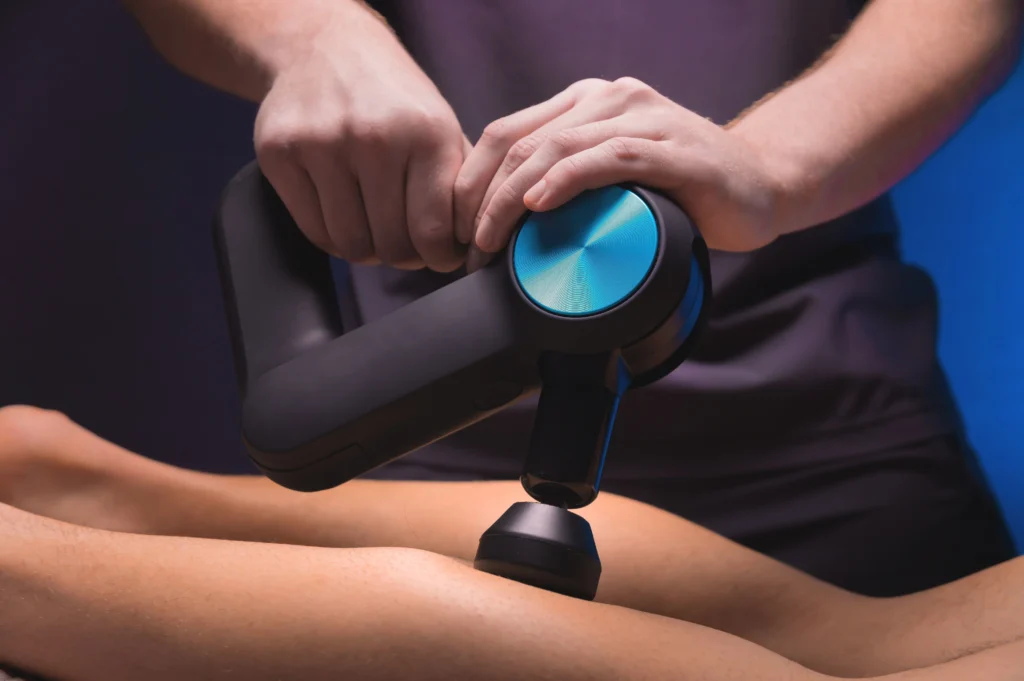
It is equally important to be accurate about what sports massage does not do. A comprehensive systematic review and meta-analysis found no evidence that massage improves strength, jump, sprint or endurance performance, findings consistent with subsequent research through 2025. What the evidence does confirm is a small but statistically significant improvement in flexibility and meaningful reduction in DOMS, alongside mechanoreceptor-mediated pain modulation through gate-control mechanisms at the spinal dorsal horn, the same pathway that explains why mechanical pressure genuinely reduces the perception of soreness even where it cannot reverse the underlying structural muscle damage.
At Birmingham Physiocare Ltd on Pershore Road in Birmingham, sports massage is delivered as a genuine recovery and flexibility tool, accurately positioned within your wider rehabilitation or training programme rather than marketed as a performance enhancer it has not been shown to be.
Sports massage is most clinically valuable for recovery, flexibility and the management of accumulated muscular tension associated with training load, distinct from the structural and neurological mechanisms targeted by our other treatments.
What Sports Massage Addresses
- Delayed Onset Muscle Soreness: 2025 research confirms deep tissue massage produces a clinically meaningful, moderate enhancement in perceived soreness following eccentric exercise, with the underlying mechanism now linked to stabilised intracellular calcium handling and reduced muscle spasm at the cellular level.
- Reduced Flexibility Following Training Load: Among the few outcomes consistently supported across systematic review evidence, with massage shown to produce small but statistically significant flexibility improvements where sustained training has left tissue tight and restricted.
- Post-Match and Post-Competition Recovery: Applied within structured recovery protocols, with research in competitive athletes confirming sports massage enhances muscle power recovery indicators and reduces DOMS more effectively than active stretching alone following intense competitive exertion.
- Accumulated Tension From Training Cycles: Bi-weekly deep tissue massage sessions of forty to sixty minutes, the dose and frequency identified across systematic review evidence as optimal, support athletes managing the cumulative muscular load of structured training without risking over-fatigue from excessive treatment frequency.
- Pain Modulation Alongside Injury Rehabilitation: The mechanoreceptor-mediated, gate-control pain suppression mechanism massage activates provides a genuine analgesic effect that complements, rather than replaces, the structural treatment your manual therapy and exercise rehabilitation programme addresses directly.
Get in touch with us
service timing ( Mon to Fri )
09 Am To 6 Pm
service timing ( Sat to Sun )
10:30 Am To 5 Pm
Our Services
Birmingham Physiocare In a nutshell
What Makes Birmingham Physiocare Different?
Book Your Physiotherapy Assessment !
Honest About What It Does
Sports massage is positioned accurately as a recovery and flexibility tool, not marketed as a direct performance enhancer the evidence does not support. You receive a clear explanation of what to genuinely expect.
Evidence-Based Frequency and Technique
Deep tissue technique delivered at the bi-weekly frequency and session duration research has identified as optimal, avoiding both under-dosing and the over-fatigue risk of excessive treatment intervals.
Home Visits Across Birmingham
Our domiciliary service extends sports massage to your home across Birmingham and the West Midlands for athletes and active patients where clinic attendance is not practical.
HCPC & MCSP Registered
Chartered Physiotherapist with specialist sports massage training, integrated within a clinical framework rather than delivered as an isolated wellness service.
TARGETED RECOVERY. ACCURATE EXPECTATIONS. REAL CELLULAR MECHANISM.
From First Appointment To Full Recovery
RECOVERY HUB
BIRMINGHAM PHYSIOCARE
Step 1: Load Profiling
Step 2: Deep Tissue Response
Step 3: Periodisation Strategy
Load Assessment
Step 1: Establish Your Training Load and Recovery Goal
Your physiotherapist discusses your current training cycle, competition schedule and the specific muscle groups under the greatest cumulative load, distinguishing whether your priority is DOMS management, flexibility restoration or general recovery support within a wider rehabilitation plan.
Targeted Modulation
Step 2: Deep Tissue Technique Applied to Affected Muscle Groups
Sustained pressure is applied to deeper layers of muscle and connective tissue, the technique research has consistently associated with measurable DOMS reduction and the mechanoreceptor stimulation underlying gate-control pain suppression.
Session duration of forty to sixty minutes reflects the dose identified as optimal across current evidence.
Cycle Alignment
Step 3: Integration Within Your Wider Training or Rehabilitation Cycle
Where sports massage is supporting recovery from injury rather than training load alone, it is sequenced alongside your manual therapy and exercise programme, with bi-weekly frequency allowing adequate recovery between sessions while maintaining consistent support through your training or rehabilitation cycle.
TESTIMONIALS
What Our Patients Say About Their Journey

Training for my first marathon left my calves and quads constantly sore between sessions. Birmingham Physiocare explained clearly what the massage would and would not do, which I genuinely appreciated rather than vague promises. The DOMS reduction has been real and consistent through my heaviest training weeks
Post-match recovery had always been guesswork until Birmingham Physiocare built sports massage into my recovery routine alongside the rest of my physio plan. The flexibility improvement in particular has been noticeable, and the team explained exactly why that benefit shows up reliably while performance gains do not.
Coming back from a hamstring strain, I wanted recovery support that complemented the actual rehabilitation work rather than replacing it. Birmingham Physiocare integrated massage into my treatment plan properly, never positioning it as the main event, which gave me confidence the whole approach was genuinely evidence-led.
Frequently Asked Questions About Sports Massage at Birmingham
Essential FAQs
The honest answer is no, not directly. Systematic review and meta-analysis evidence consistently finds no improvement in strength, jump, sprint or endurance performance from massage. What it does reliably provide is a small but statistically significant improvement in flexibility and a clinically meaningful reduction in delayed onset muscle soreness, both genuinely valuable for sustained training but distinct from direct performance enhancement.
Delayed onset muscle soreness is caused by microscopic muscle fibre damage from unfamiliar or intense exercise, not lactate accumulation as commonly believed, since lactate returns to resting levels within an hour of exercise stopping. Massage does not reverse this structural damage, but 2025 research has demonstrated it stabilises intracellular calcium handling within muscle cells and activates gate-control pain suppression pathways, producing a genuine, measurable reduction in the perceived soreness and spasm associated with the injury, even while the underlying tissue repair occurs at its own biological pace.
Systematic review evidence identifies bi-weekly frequency, sessions roughly every two weeks, with forty to sixty minute duration, as the optimal dose for deep tissue massage, allowing sufficient recovery between sessions while providing consistent therapeutic exposure. More frequent sessions are not necessarily more beneficial and may risk additional fatigue without added recovery advantage.
Yes, where it is integrated appropriately. Sports massage at Birmingham Physiocare is positioned alongside manual therapy and structured exercise rehabilitation rather than used in place of it, providing genuine pain modulation and recovery support while the structural and movement-based work that resolves an injury continues separately.
Manual therapy is a clinical intervention directed at specific joints, nerves and soft tissue structures to restore function and address a diagnosed mechanical cause of pain. Sports massage works on muscle tissue more broadly, supporting recovery, flexibility and soreness management without requiring a structural diagnosis to direct it. Both have genuine, distinct clinical roles and are frequently used together rather than as alternatives to one another.
Some temporary tenderness in the treated area is common following deep tissue technique, particularly where significant tension or soreness was already present, and typically resolves within a day. Your physiotherapist will discuss pressure tolerance and adjust technique accordingly throughout your session.
SAME-DAY DIAGNOSTIC IMAGING
Looking for Sports Massage In Birmingham
Evidence-based deep tissue recovery support at 650 Pershore Road, Selly Oak, Birmingham B29 7NX. Speak to our specialist team toda
✓ No GP referral required
✓ Direct specialist access
✓ Same-week appointments
Call us now — speak to a physio
0121 330 0272
or
Book Your Appointment
Instant confirmation • Free parking