Info@birminghamphysiocare.co.uk
01213300272
+447743087832
650 Pershore Road, Birmingham, B29 7NX

- Clinic Overview
- TREATMENTS
- Manual Therapy
- Shockwave Therapy
- Low Level Laser Therapy (LLLT)
- Musculoskeletal MSK Ultrasound
- Ultrasound-Guided Injections
- Sports Massage
- Sports Injury Rehabilitation
- Post-Surgical & Injury Rehabilitation
- Chronic Pain Management
- Cupping Therapy
- Acupuncture & Dry Needling
- Workplace Assessments
- Exercise Rehabilitation
- MUSCULOSKELETAL
- NEUROLOGICAL
- ORTHOPAEDIC
- ELDERLY
- SPORTS
- HOME VISITS
- Pricing
- Contact Us
- Blogs & Case Studies

Professional Domiciliary Physiotherapy Services Delivered to Your Door Step
- Clinic Overview
- TREATMENTS
- Manual Therapy
- Shockwave Therapy
- Low Level Laser Therapy (LLLT)
- Musculoskeletal MSK Ultrasound
- Ultrasound-Guided Injections
- Sports Massage
- Sports Injury Rehabilitation
- Post-Surgical & Injury Rehabilitation
- Chronic Pain Management
- Cupping Therapy
- Acupuncture & Dry Needling
- Workplace Assessments
- Exercise Rehabilitation
- MUSCULOSKELETAL
- NEUROLOGICAL
- ORTHOPAEDIC
- ELDERLY
- SPORTS
- HOME VISITS
- Pricing
- Contact Us
- Blogs & Case Studies
- Clinic Overview
- TREATMENTS
- Manual Therapy
- Shockwave Therapy
- Low Level Laser Therapy (LLLT)
- Musculoskeletal MSK Ultrasound
- Ultrasound-Guided Injections
- Sports Massage
- Sports Injury Rehabilitation
- Post-Surgical & Injury Rehabilitation
- Chronic Pain Management
- Cupping Therapy
- Acupuncture & Dry Needling
- Workplace Assessments
- Exercise Rehabilitation
- MUSCULOSKELETAL
- NEUROLOGICAL
- ORTHOPAEDIC
- ELDERLY
- SPORTS
- HOME VISITS
- Pricing
- Contact Us
- Blogs & Case Studies
MANUAL THERAPY· BIRMINGHAM PHYSIOCARE
The Joint Is Stuck. The Hands Know How To Unstick It.
A joint that has stopped moving correctly does not start moving correctly again through rest, time or hope. The mechanoreceptors within the joint capsule have adapted to a restricted range. The surrounding musculature has tightened protectively around the dysfunction. The nervous system has recalibrated its perception of what normal movement should feel like, often lowering the threshold at which it interprets motion as threatening. Manual therapy intervenes directly in this cycle applying graded mechanical force to the specific joint or tissue involved, which in turn triggers measurable neurophysiological change at both the peripheral and central nervous system level.
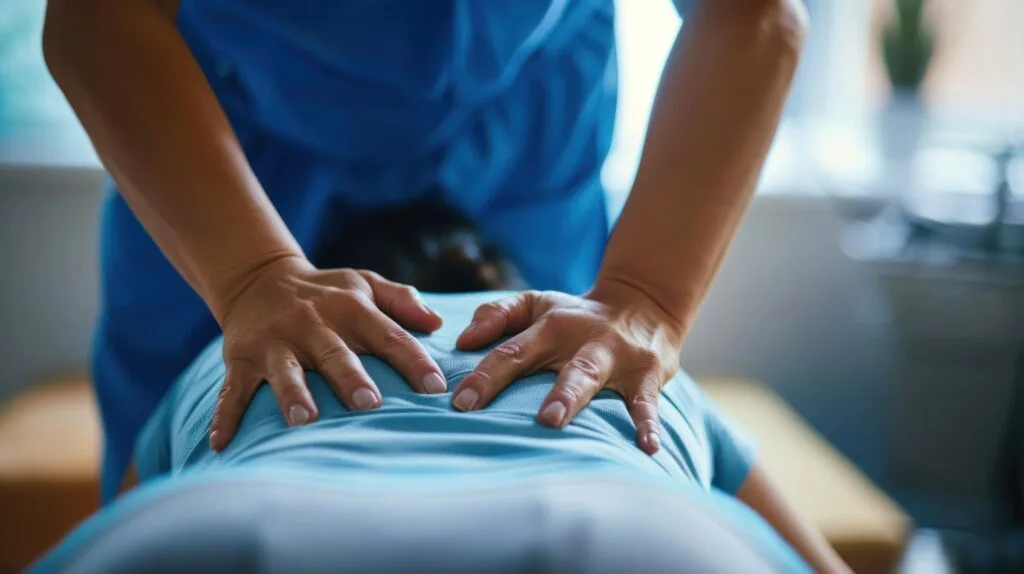
This is not a single technique. It is a clinical discipline built on six recognised frameworks the Maitland concept, the Mulligan approach, the Kaltenborn method, the McKenzie system, the Cyriax model and contemporary neurodynamic theory each offering a different lens through which joint and soft tissue dysfunction is assessed and addressed. Maitland’s graded mobilisation system, running from gentle oscillatory grade I movements through to grade V manipulation, prioritises continuous reassessment and adapting technique to the individual patient’s irritability and presentation. Mulligan’s Mobilisation With Movement combines a sustained passive glide applied by the physiotherapist with an active movement performed by the patient a technique that recent 2025 research comparing the two approaches found produces measurably superior outcomes for chronic low back pain, attributed to the combined mechanical and neurophysiological effect of active patient engagement during the correction.
At Birmingham Physiocare Ltd on Pershore Road in Birmingham, the technique applied is never arbitrary. It is selected based on the specific structure involved, the irritability of the presentation, and the stage of your condition then progressed or changed entirely as your tissue response dictates. Where the diagnosis requires confirmation beyond what palpation and movement testing can establish, MSK Ultrasound provides that clarity at the same appointment. Where chronic tendon involvement sits alongside joint restriction, Shockwave Therapy addresses what manual technique alone cannot reach at a tissue level.
Manual therapy operates through two parallel mechanisms that 2025 systematic review evidence has confirmed act in combination direct biomechanical correction of joint position and tissue length, alongside neurophysiological modulation of pain processing at the spinal cord and brainstem level. The selected technique depends entirely on which mechanism your presentation requires.
What Manual Therapy Addresses
- Mechanical Back Pain and Facet Joint Dysfunction: Graded oscillatory mobilisation at the specific lumbar or thoracic segment identified through palpation and movement testing, restoring accessory joint glide and interrupting the guarding response that perpetuates stiffness. Where active patient-engaged correction produces superior central pain modulation, Mulligan SNAG technique is selected over passive Maitland grades.
- Cervicogenic Headache and Upper Cervical Dysfunction: Sustained Natural Apophyseal Glides applied specifically at C1 through C3, the segments responsible for the majority of cervicogenic headache presentations. The technique directly addresses the source joint dysfunction rather than managing the referred headache symptom.
- Sciatica and Radicular Leg Pain: Neurodynamic mobilisation techniques including sliders and tensioners applied to the affected nerve root and its surrounding interface, reducing mechanosensitivity and restoring the nerve’s capacity to glide freely through adjacent tissue during normal movement.
- Frozen Shoulder and Adhesive Capsulitis: Staged mobilisation matched precisely to the freezing, frozen and thawing phases of the condition, since applying aggressive technique during the acutely irritable freezing phase actively worsens the presentation, while insufficient intensity during the frozen phase fails to progress capsular extensibility.
- Hip and Knee Osteoarthritis: Combined Maitland and Mulligan mobilisation reduces pain, improves range of movement and restores strength more effectively than either approach used in isolation, with current evidence confirming manual therapy combined with supervised exercise as the most effective conservative pathway for osteoarthritic joints.
- Chronic Ankle Instability: Mobilisation With Movement combined with corrective taping addresses the biomechanically altered fibular position frequently underlying recurrent ankle sprain, a mechanism distinct from simple ligament laxity and one that standard strengthening programmes alone do not resolve.
- Post-Surgical Joint Stiffness: Graded mobilisation working within consultant-defined protocols to manage scar tissue adhesion and restore accessory joint movement following orthopaedic procedures, coordinated with exercise rehabilitation as tissue healing progresses.
Get in touch with us
service timing ( Mon to Fri )
09 Am To 6 Pm
service timing ( Sat to Sun )
10:30 Am To 5 Pm
Our Treatments
Birmingham Physiocare In a nutshell
What Makes Birmingham Physiocare Different?
Book Your Physiotherapy Assessment !
Technique Selected By Your Presentation
The mobilisation grade, the specific framework and the joint targeted are determined by your assessment findings, not applied as a default. What is delivered at session one is rarely identical to what is delivered at session four, because your tissue has changed and the technique reflects that.
Every Mechanism Addressed, Not Just One
Where chronic tendon pathology accompanies joint restriction, Shockwave Therapy and injection therapy work alongside manual technique under the same clinician addressing the biomechanical and the tissue-level driver of your symptoms together.
Home Visits Across Birmingham
Our domiciliary service delivers the same graded, technique-specific manual therapy directly to your home across Birmingham and the West Midlands for patients where clinic attendance is not possible.
HCPC & MCSP Registered
Chartered Physiotherapist with advanced post-graduate training across Maitland, Mulligan and neurodynamic frameworks. Fully regulated and accountable to professional standards across every technique applied.
SIX FRAMEWORKS. ONE PRECISE DECISION FOR YOUR PRESENTATION.
From First Appointment To Full Recovery
THERAPY PROCESS
BIRMINGHAM PHYSIOCARE
Step 1: Framework Assessment
Step 2: Graded Technique
Step 3: Functional Consolidation
Clinical Mapping
Step 1: Identify The Structure And The Mechanism
Your physiotherapist conducts a detailed assessment of joint accessory movement, tissue irritability, neurological status and the specific movement patterns provoking your symptoms.
This determines not only which structure is involved but which manual therapy framework is clinically indicated, whether your presentation responds best to passive oscillatory Maitland grades, active Mulligan correction, neurodynamic mobilisation or a combined approach. Where structural confirmation is required, MSK Ultrasound is performed at the same appointment.
Dynamic Adjustment
Step 2: Graded Technique, Reassessed In Real Time
Treatment is applied at the specific grade and framework your assessment indicates, with reassessment occurring throughout the session rather than only at the start. If a grade III mobilisation produces an unexpected increase in irritability, the technique is adjusted immediately within the same session.
If active Mulligan correction produces a more complete and immediate range of movement improvement than passive technique alone, that becomes the primary approach moving forward. This continuous reassessment is the defining principle of skilled manual therapy practice.
Long-Term Recovery
Step 3: Mechanical Gain Converted To Lasting Function
Manual therapy restores joint mechanics and modulates pain processing. Exercise rehabilitation consolidates that gain into durable strength, motor control and movement confidence, preventing the protective guarding pattern from re-establishing itself once treatment frequency reduces.
Where chronic tendon involvement is identified alongside the joint dysfunction, Shockwave Therapy is introduced at the appropriate stage to address the tissue-level component that mobilisation technique was never designed to resolve.
TESTIMONIALS
What Our Patients Say About Their Journey

Two years of neck pain and headaches arriving together. Birmingham Physiocare identified the specific upper cervical joints involved from the first appointment and explained precisely why a SNAG technique at that level would address the headache source rather than just the symptom. Four sessions in, headache frequency had reduced significantly. By session seven they had stopped entirely
Three months of sciatica down my leg. Birmingham Physiocare identified both the spinal joint restriction and the neural component and treated both with distinct techniques in the same session. The combination produced a noticeable difference within two sessions. The assessment alone was more thorough than two previous NHS referrals combined.
A frozen shoulder at its most restricted, around thirty degrees of movement and significant night pain. Birmingham Physiocare adjusted technique at every stage as the shoulder moved through freezing, frozen and thawing never pushing too hard during the painful phase, never too gentle once range started returning. Full movement restored. Completely pain free.
Frequently Asked Questions About Manual Therapy at Birmingham
Essential FAQs
The Maitland approach uses passive oscillatory mobilisation graded I through V, where the physiotherapist moves the joint while the patient remains relaxed, with continuous reassessment guiding progression. The Mulligan approach combines a sustained passive glide applied by the physiotherapist with an active movement performed by the patient simultaneously. Current 2025 research comparing the two for chronic low back pain found Mulligan mobilisation produced greater reductions in pain and disability scores, attributed to the combined mechanical and neurophysiological effect of active patient engagement facilitating central pain modulation and reduced fear avoidance behaviour. Your physiotherapist selects between them based on which mechanism your specific presentation requires, and frequently combines both within the same treatment plan.
Manual therapy operates through mechanisms beyond simple mechanical correction. A 2025 systematic review on the nervous system effects of spinal manual therapy confirmed measurable neurophysiological changes at both central and autonomic levels following treatment, alongside mechanical effects on joint mobility. Joint mobilisation stimulates mechanoreceptors that modulate pain signal transmission at the spinal cord level, while sustained mobilisation techniques have demonstrated effects on central pain processing and autonomic nervous system activity. This is why manual therapy frequently produces pain reduction in tissue beyond the immediate joint treated.
Manipulation, classified as Maitland grade V, involves a high-velocity low-amplitude thrust at the end of available joint range, distinct from the slower, controlled oscillatory movements used in grades I through IV mobilisation. It is applied only following thorough assessment confirming no contraindications are present, and only when clinically indicated for your specific presentation. Most patients experience an immediate increase in range of movement and reduction in pain following manipulation, occasionally accompanied by an audible joint sound which is not indicative of damage. Manipulation is one tool within manual therapy, not a default technique applied universally.
Acute mechanical presentations with clear joint restriction frequently respond within two to three sessions of correctly applied technique. Chronic presentations involving central sensitisation, longstanding compensatory patterns or significant capsular restriction such as frozen shoulder require a longer, staged course measured in weeks rather than sessions. Your physiotherapist reassesses at every appointment and will tell you honestly if the chosen technique is not producing the expected response, adjusting the framework rather than continuing an approach that is not working.
Discomfort during certain techniques is normal, particularly when mobilising an acutely irritable joint or addressing significant capsular restriction. Your physiotherapist explains the expected sensation before applying any technique and continuously monitors your response throughout. Mild soreness for 24 to 48 hours following treatment, particularly after the first one or two sessions, is a recognised and normal tissue response rather than a sign that something has gone wrong.
Yes, and this is standard practice rather than an additional service. Mobilisation restores the joint range and reduces the pain that often prevents effective strengthening exercise. Within the same appointment, your physiotherapist frequently moves directly from manual technique into guided active movement, capitalising on the temporary window of improved range and reduced guarding that manual therapy creates.
SAME-DAY DIAGNOSTIC IMAGING
Need A Manual Therapy In Birmingham?
Same day manual therapy assessment and treatment at 650 Pershore Road, Selly Oak, Birmingham B29 7NX. Speak to our specialist team today.
Call us now — speak to a physio
0121 330 0272
or
Book Your Appointment
Instant confirmation • Free parking