Info@birminghamphysiocare.co.uk
01213300272
+447743087832
650 Pershore Road, Birmingham, B29 7NX

- Clinic Overview
- TREATMENTS
- Manual Therapy
- Shockwave Therapy
- Low Level Laser Therapy (LLLT)
- Musculoskeletal MSK Ultrasound
- Ultrasound-Guided Injections
- Sports Massage
- Sports Injury Rehabilitation
- Post-Surgical & Injury Rehabilitation
- Chronic Pain Management
- Cupping Therapy
- Acupuncture & Dry Needling
- Workplace Assessments
- Exercise Rehabilitation
- MUSCULOSKELETAL
- NEUROLOGICAL
- ORTHOPAEDIC
- ELDERLY
- SPORTS
- HOME VISITS
- Pricing
- Contact Us
- Blogs & Case Studies

Professional Domiciliary Physiotherapy Services Delivered to Your Door Step
- Clinic Overview
- TREATMENTS
- Manual Therapy
- Shockwave Therapy
- Low Level Laser Therapy (LLLT)
- Musculoskeletal MSK Ultrasound
- Ultrasound-Guided Injections
- Sports Massage
- Sports Injury Rehabilitation
- Post-Surgical & Injury Rehabilitation
- Chronic Pain Management
- Cupping Therapy
- Acupuncture & Dry Needling
- Workplace Assessments
- Exercise Rehabilitation
- MUSCULOSKELETAL
- NEUROLOGICAL
- ORTHOPAEDIC
- ELDERLY
- SPORTS
- HOME VISITS
- Pricing
- Contact Us
- Blogs & Case Studies
- Clinic Overview
- TREATMENTS
- Manual Therapy
- Shockwave Therapy
- Low Level Laser Therapy (LLLT)
- Musculoskeletal MSK Ultrasound
- Ultrasound-Guided Injections
- Sports Massage
- Sports Injury Rehabilitation
- Post-Surgical & Injury Rehabilitation
- Chronic Pain Management
- Cupping Therapy
- Acupuncture & Dry Needling
- Workplace Assessments
- Exercise Rehabilitation
- MUSCULOSKELETAL
- NEUROLOGICAL
- ORTHOPAEDIC
- ELDERLY
- SPORTS
- HOME VISITS
- Pricing
- Contact Us
- Blogs & Case Studies
SPORTS INJURY REHABILITATION · BIRMINGHAM PHYSIOCARE
Symptom-Free Is Not The Same As Ready. We Test The Difference.
The single most common error in returning to sport after injury is treating the absence of pain as proof of readiness. It is not. Following ACL reconstruction, research confirms approximately 81% of athletes return to some form of sport, yet only 55% return to competitive level, and reinjury remains a significant risk for those who do return, frequently because the decision to return was based on symptom resolution and time elapsed rather than objective functional testing. A 2025 study examining male athletes after ACL reconstruction specifically investigated whether nine months represents the genuine optimal window for safe return, reinforcing that timing alone, divorced from measured readiness, is an insufficient criterion on its own.
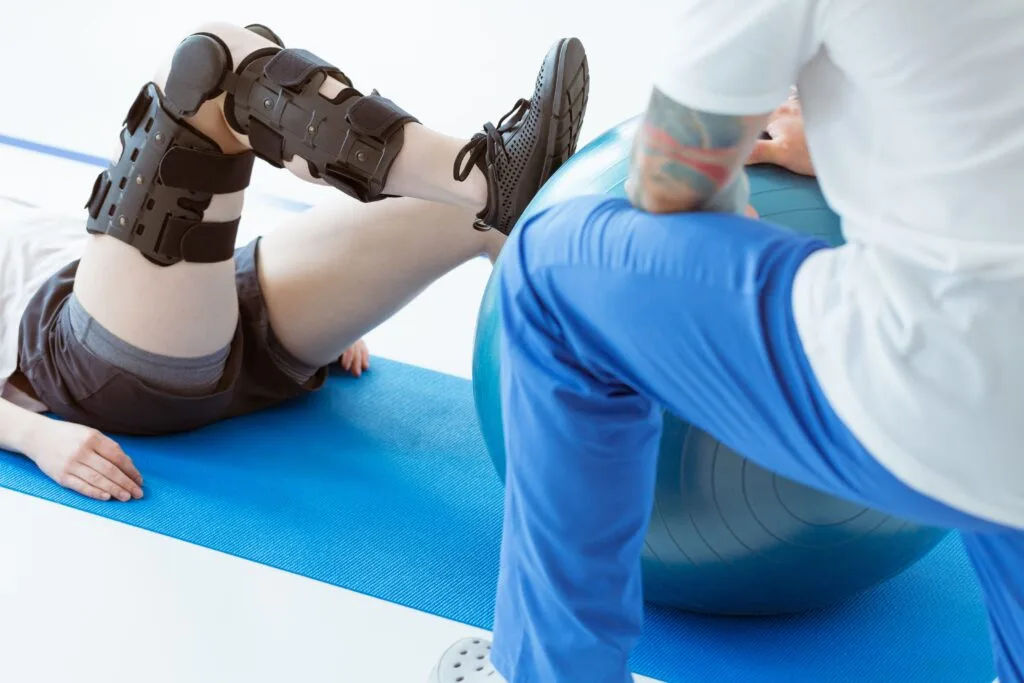
Modern sports rehabilitation has moved decisively away from rigid timeframes toward a personalised, criteria-based approach guided by objective testing and adapted to the specific injury and the specific athlete. This means structured assessment of strength symmetry between limbs, single-leg stability, sport-specific movement quality and graduated sport simulation, before any return to play decision is made, rather than a calendar date or a pain-free morning being treated as sufficient evidence.
At Birmingham Physiocare Ltd on Pershore Road in Birmingham, sports injury rehabilitation follows precisely this framework. This is the athlete-focused performance pathway, distinct from our orthopaedic post-surgical rehabilitation which addresses general structural tissue healing, this page is specifically built around restoring competitive performance capacity and objectively minimising re-injury risk before clearance is given. Where diagnostic clarity on the injured structure genuinely changes the rehabilitation pathway, our on-site MSK Ultrasound confirms it directly.
Athletic return to sport is governed by a distinct set of clinical priorities to general injury recovery, namely restoring sport-specific movement quality, eliminating side-to-side asymmetry, and rebuilding the neuromuscular control that protects against the specific re-injury patterns each sport and each injury type carries.
What Sports Injury Rehabilitation Addresses
- ACL And Significant Knee Ligament Injury: Formal ESSKA-AOSSM-AASPT international consensus confirms return to sport following knee ligament injury should be both criterion-based and time-based together, combining patient-reported outcomes with performance-based testing, never one in isolation, given the well-documented reinjury risk this specific injury carries.
- Hamstring And Lower Limb Muscle Strains: Systematic review evidence specifically addresses return-to-play criteria following lower limb muscle injuries in soccer and comparable sports, where premature return based on symptom resolution alone is consistently identified as a primary driver of recurrent strain.
- Ankle Sprains And Ligament Injuries: A straightforward ankle sprain may genuinely resolve within four to six weeks of structured rehabilitation, but functional testing of single-leg stability and proprioception remains essential before sport clearance, given how frequently inadequately rehabilitated ankle sprains progress to chronic instability.
- Meniscal Tears In Athletes: The 2024 international consensus on meniscus rehabilitation confirms non-operative physical therapy as the first-line approach for many tears, with return to sport again required to be both criterion and time-based, reflecting the genuinely low to moderate quality of evidence underpinning blanket timeframes in this specific injury.
- Rotator Cuff And Shoulder Injuries In Throwing And Overhead Sports: Rehabilitation requiring three to six months or longer depending on severity, where sport-specific movement quality testing for the overhead athlete carries particular importance given the repetitive loading demands these sports place on the shoulder.
- Sport-Specific Return To Play Testing: Structured functional assessment, including strength symmetry between limbs, single-leg stability and graduated, sport-specific movement simulation, applied as the final clearance stage regardless of which structure was originally injured.
Get in touch with us
service timing ( Mon to Fri )
09 Am To 6 Pm
service timing ( Sat to Sun )
10:30 Am To 5 Pm
Our Services
Birmingham Physiocare In a nutshell
What Makes Birmingham Physiocare Different?
Book Your Physiotherapy Assessment !
Criterion And Time Based Together
Return to sport clearance reflects current international consensus, combining objective functional testing with appropriate healing timelines, never relying on either symptom absence or a calendar date alone.
Diagnostic Confirmation Where It Changes The Plan
Where the specific structure and severity of your sports injury would meaningfully alter your rehabilitation pathway, our on-site MSK Ultrasound confirms it directly rather than relying on clinical estimation alone.
Re-Injury Risk Addressed Directly
Strength asymmetry and movement quality deficits, the two factors most consistently linked to sports re-injury, are specifically tested and corrected before clearance, rather than assumed resolved once pain has settled.
HCPC & MCSP Registered
Chartered Physiotherapist with specialist training in sport-specific functional testing and graduated return to play protocols, distinct from general post-surgical rehabilitation methodology.
SYMPTOM-FREE IS THE START. OBJECTIVE READINESS IS THE FINISH LINE.
From First Appointment To Full Recovery
SPORTS PERF
BIRMINGHAM PHYSIOCARE
Step 1: Demand Profiling
Step 2: Kinetic Loading
Step 3: Clearance Testing
Injury Profiling
Step 1: Diagnose The Injury And Establish Sport-Specific Demands
Your physiotherapist confirms precisely what structure was injured and its severity, alongside a clear understanding of the specific physical demands your sport places on that structure, since the rehabilitation priorities for a contact sport collision injury differ meaningfully from a repetitive overhead throwing injury or a change-of-direction ligament injury.
Biomechanical Mechanics
Step 2: Progressive Loading Toward Sport-Specific Movement
Rehabilitation advances through restoring strength, then sport; specific movement patterns, then graduated exposure to the actual loading conditions your sport demands; change of direction, deceleration, contact, repetitive overhead movement; building toward genuine readiness rather than generic gym-based strength alone.
Objective Clearance
Step 3: Objective Return To Sport Testing Before Clearance
Before any return to play decision, your physiotherapist conducts formal functional testing, strength symmetry between your injured and uninjured limb, single-leg stability assessment and graduated sport simulation.
These are the same objective markers current international consensus and systematic review evidence identifies as essential, refusing to base clearance on pain-free movement alone.
TESTIMONIALS
What Our Patients Say About Their Journey

I felt completely fine at four months and assumed I was ready to play again. Birmingham Physiocare tested my strength symmetry and found a significant deficit in my injured leg I genuinely could not feel myself. They were honest that returning at that point carried real re-injury risk and kept me progressing until the testing actually confirmed readiness at month eight. I am still playing without issue a year on, which I credit entirely to that decision.
Previous hamstring strains had always recurred within weeks of returning to training because I went back as soon as the pain settled. Birmingham Physiocare explained why that approach was the actual problem and built a programme around sport-specific loading and proper testing before clearing me. First season in years without a repeat strain.
Overhead shoulder injuries in swimming need genuinely sport-specific rehabilitation, not generic shoulder exercises. Birmingham Physiocare understood the specific demands swimming places on the joint and built the movement testing around that rather than a one-size-fits-all return to sport checklist. Back to full training load with confidence rather than anxiety about reinjuring it.
Frequently Asked Questions About Sports Injury Rehabilitation at Birmingham
Essential FAQs
Pain resolution reflects symptom control, not the restoration of strength symmetry, neuromuscular control or sport-specific movement quality, the factors most consistently linked to re-injury risk. Research following ACL reconstruction confirms that while a majority of athletes feel ready and return to some activity, a meaningfully smaller proportion successfully return to competitive level, with reinjury remaining a significant risk precisely because pain-free movement was treated as sufficient evidence of readiness on its own.
Formal functional assessment comparing your injured limb against your uninjured limb for strength, alongside single-leg stability testing and graduated, sport-specific movement simulation that progressively reintroduces the actual demands your sport places on the injured structure, change of direction, deceleration, contact or repetitive overhead loading, before any clearance decision is made.
This depends entirely on the specific injury, its severity, your age and your prior activity level. A straightforward ankle sprain may resolve within four to six weeks of structured rehabilitation, while ACL reconstruction or significant rotator cuff injury may genuinely require three to six months or considerably longer. Current 2025 research specifically investigating ACL reconstruction recovery has examined whether nine months represents the optimal window for male athletes, reflecting how individualised and evidence-driven these timelines genuinely are rather than fixed.
International consensus is explicit that both should be considered together rather than either in isolation, formal recommendations on meniscus and ACL rehabilitation specifically state return to sport should be criterion-based and time-based combined. Relying purely on a calendar timeframe risks clearing an athlete before functional readiness has genuinely been achieved, while relying purely on subjective testing without respecting minimum tissue healing timeframes carries its own risk.
Our post-surgical and injury rehabilitation service addresses the general four-phase tissue healing framework relevant to any surgical procedure or significant injury. Sports injury rehabilitation specifically layers sport-specific movement demands, formal return to play testing and re-injury risk reduction on top of that foundation, the additional clinical focus required to safely return an athlete to competitive performance rather than general daily function.
Your physiotherapist will be direct about this rather than clearing you regardless. If strength symmetry, stability testing or movement quality has not yet reached the required standard, your programme continues at that stage until objective criteria are genuinely met, since premature clearance is the single most consistently identified driver of sports re-injury across the current evidence base.
SAME-DAY DIAGNOSTIC IMAGING
Looking For Sports Injury Rehabilitation In Birmingham?
Criteria based recovery built around tissue healing science at 650 Pershore Road, Selly Oak, Birmingham B29 7NX. Speak to our specialist team today.
✓ No GP referral required
✓ Direct specialist access
✓ Same-week appointments
Call us now — speak to a physio
0121 330 0272
or
Book Your Appointment
Instant confirmation • Free parking