Info@birminghamphysiocare.co.uk
01213300272
+447743087832
650 Pershore Road, Birmingham, B29 7NX

- Clinic Overview
- TREATMENTS
- Manual Therapy
- Shockwave Therapy
- Low Level Laser Therapy (LLLT)
- Musculoskeletal MSK Ultrasound
- Ultrasound-Guided Injections
- Sports Massage
- Sports Injury Rehabilitation
- Post-Surgical & Injury Rehabilitation
- Chronic Pain Management
- Cupping Therapy
- Acupuncture & Dry Needling
- Workplace Assessments
- Exercise Rehabilitation
- MUSCULOSKELETAL
- NEUROLOGICAL
- ORTHOPAEDIC
- ELDERLY
- SPORTS
- HOME VISITS
- Pricing
- Contact Us
- Blogs & Case Studies

Professional Domiciliary Physiotherapy Services Delivered to Your Door Step
- Clinic Overview
- TREATMENTS
- Manual Therapy
- Shockwave Therapy
- Low Level Laser Therapy (LLLT)
- Musculoskeletal MSK Ultrasound
- Ultrasound-Guided Injections
- Sports Massage
- Sports Injury Rehabilitation
- Post-Surgical & Injury Rehabilitation
- Chronic Pain Management
- Cupping Therapy
- Acupuncture & Dry Needling
- Workplace Assessments
- Exercise Rehabilitation
- MUSCULOSKELETAL
- NEUROLOGICAL
- ORTHOPAEDIC
- ELDERLY
- SPORTS
- HOME VISITS
- Pricing
- Contact Us
- Blogs & Case Studies
- Clinic Overview
- TREATMENTS
- Manual Therapy
- Shockwave Therapy
- Low Level Laser Therapy (LLLT)
- Musculoskeletal MSK Ultrasound
- Ultrasound-Guided Injections
- Sports Massage
- Sports Injury Rehabilitation
- Post-Surgical & Injury Rehabilitation
- Chronic Pain Management
- Cupping Therapy
- Acupuncture & Dry Needling
- Workplace Assessments
- Exercise Rehabilitation
- MUSCULOSKELETAL
- NEUROLOGICAL
- ORTHOPAEDIC
- ELDERLY
- SPORTS
- HOME VISITS
- Pricing
- Contact Us
- Blogs & Case Studies
POST-SURGICAL & INJURY REHABILITATION · BIRMINGHAM PHYSIOCARE
Tissue Heals On Its Own Timeline. Rehabilitation Decides What You Get Back.
Surgery repairs the structure, and the body then heals it according to a biological timeline that no amount of motivation can shorten. Muscle tissue regenerates within two to four weeks, tendons take four to six weeks, bone requires six to eight weeks, and ligament and cartilage can take up to twelve weeks before they reliably tolerate load. Recovery that ignores this timeline, by either rushing progression or by remaining unnecessarily cautious long after tissue has healed, produces worse outcomes than recovery that respects it precisely.
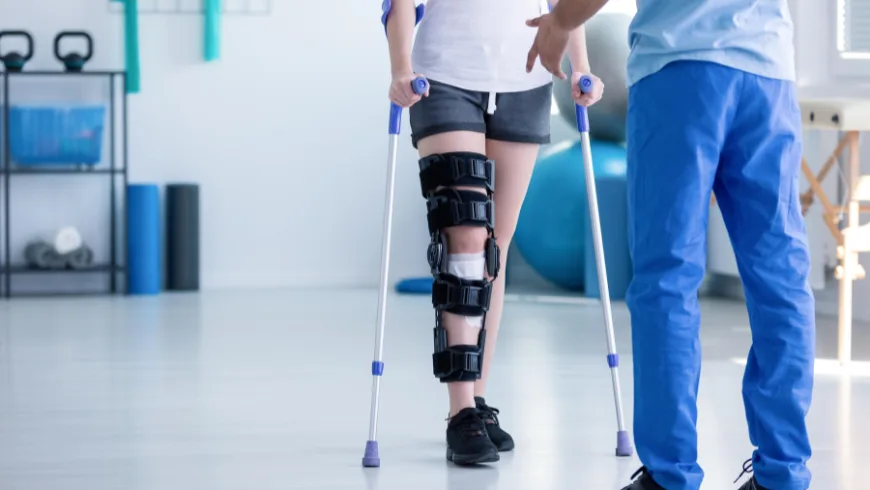
This is the genuine clinical challenge of post-surgical and injury rehabilitation, and it is why a generic exercise sheet handed out at discharge consistently underperforms structured, criteria-based physiotherapy. Recovery progresses through four overlapping phases, an immediate post-operative phase in the first week focused on wound healing and early mobilisation, an early rehabilitation phase across the following weeks restoring range of movement, an intermediate phase building strength and endurance, and an advanced phase returning to full function. Crucially, a 2025 clinical commentary on rehabilitation following orthopaedic surgery confirms that progression between these phases should be criteria-based rather than purely time-based, meaning you advance when your tissue and function demonstrate readiness, not simply when a calendar date arrives.
At Birmingham Physiocare Ltd on Pershore Road in Birmingham, post-surgical and injury rehabilitation is delivered against this exact framework. Where structural healing needs to be confirmed objectively rather than estimated, our on-site MSK Ultrasound provides that evidence directly, and where chronic tendon-related complications develop during recovery, Shockwave Therapy addresses what standard exercise progression alone cannot resolve.
This is the methodology underpinning recovery from any surgical procedure or significant soft tissue injury, the criteria-based framework applied regardless of which joint or structure was operated on, distinct from the surgery-specific recovery pathways covered on our individual orthopaedic procedure pages.
What Post-Surgical & Injury Rehabilitation Addresses
- Immediate Post-Operative Recovery, Days One To Seven: Managing the acute inflammatory response that follows any surgical procedure, where the cardinal signs of inflammation, pain, swelling, heat and redness, are expected and actively managed rather than treated as a complication, alongside early protected mobilisation that research confirms reduces complications and accelerates the transition into structured rehabilitation.
- Restoring Range Of Movement, The Early Phase: Addressing the joint stiffness and tissue restriction that develops rapidly during any period of post-surgical protection or immobilisation, progressed according to the specific tissue healing timeline relevant to what was repaired, never forced ahead of biological readiness.
- Building Strength And Endurance, The Intermediate Phase: Progressive loading designed around criteria-based milestones rather than a fixed weekly schedule, where your physiotherapist confirms specific functional markers have been achieved before advancing resistance or complexity, the approach shown to reduce post-surgical recovery time by twenty to thirty percent compared with unsupervised recovery.
- Soft Tissue Injury Without Surgery: The same four-phase healing framework applies directly to significant muscle, tendon and ligament injuries managed conservatively, where physiotherapy reduces the risk of re-injury, chronic pain and long-term dysfunction that frequently develops when an injury is inadequately rehabilitated in its early stages.
- Scar Tissue And Wound Healing Support: Manual therapy techniques addressing adhesion formation around a surgical site, with meta-analysis evidence confirming physiotherapy intervention measurably improves wound healing scores and reduces scar formation following orthopaedic procedures.
- Return To Full Function, The Advanced Phase: The stage where tissue healing is genuinely complete and the limiting factor shifts to deconditioning, neuromuscular re-education and confidence in the repaired structure, requiring a distinctly different rehabilitation focus than the earlier protective phases.
Get in touch with us
service timing ( Mon to Fri )
09 Am To 6 Pm
service timing ( Sat to Sun )
10:30 Am To 5 Pm
Our Services
Birmingham Physiocare In a nutshell
What Makes Birmingham Physiocare Different?
Book Your Physiotherapy Assessment !
Criteria-Based, Not Calendar Based
You progress through each phase of recovery when objective functional and tissue criteria confirm you are ready, not simply because a set number of weeks has elapsed since your surgery or injury.
Structural Healing Confirmed, Not Assumed
Where genuine confirmation of tissue healing status would change your rehabilitation progression, our on-site MSK Ultrasound provides that evidence directly rather than relying on time elapsed as a proxy for readiness.
Complications Addressed As They Arise
Where chronic tendon-related stiffness or soft tissue complications develop during your recovery, Shockwave Therapy and manual therapy are integrated directly into your rehabilitation rather than requiring a separate referral elsewhere.
HCPC & MCSP Registered
Chartered Physiotherapist with specialist training in post-surgical rehabilitation across the four-phase healing model, working in coordination with your surgical team where relevant to your procedure.
FOUR PHASES. ONE FRAMEWORK. PROGRESSION EARNED, NOT
From First Appointment To Full Recovery
REHAB PATHWAY
BIRMINGHAM PHYSIOCARE
Step 1: Biological Baseline
Step 2: Criteria Progression
Step 3: Functional Overload
Tissue Timeline
Step 1: Establish Your Tissue Healing Baseline
Your physiotherapist establishes precisely what was surgically repaired or injured, the specific tissue type involved, and the healing timeline genuinely relevant to it, since muscle, tendon, bone, ligament and cartilage each progress at fundamentally different biological rates.
This baseline assessment, alongside any surgical protocol or precautions provided by your surgical team, determines exactly where your rehabilitation begins.
Objective Milestones
Step 2: Criteria-Based Progression Through Each Phase
Rather than advancing your programme according to a fixed weekly schedule, your physiotherapist reassesses specific functional and tissue criteria at every appointment; range of movement achieved, strength demonstrated, pain response to loading; before progressing you into the next phase.
This is the defining difference between structured rehabilitation and the unsupervised, generic exercise sheet approach research consistently shows produces a less linear, less predictable recovery.
Neuromuscular Integration
Step 3: Closing The Gap Between Tissue Healing And Full Function
By the advanced phase, your tissue is genuinely healed, and the remaining work addresses deconditioning, neuromuscular control and the confidence to use the repaired structure fully under real-world load.
This final stage is often the most overlooked in standard post-discharge care, and it is precisely where structured rehabilitation produces the difference between a technically successful surgery and a fully restored function.
TESTIMONIALS
What Our Patients Say About Their Journey

I was given a printed exercise sheet at discharge and told to progress as tolerated, which meant nothing practical to me. Birmingham Physiocare explained exactly which phase I was in and what specific criteria needed to be met before advancing, rather than just counting weeks. The structure made the entire recovery feel genuinely managed rather than guesswork.
Tendon healing takes far longer than people expect and I was terrified of reinjuring it. Birmingham Physiocare were precise about exactly where I was in the healing timeline at every stage and never pushed me ahead of what the tissue could genuinely tolerate. The progression felt slow at times but the outcome justified every bit of that patience.
Our dental nurses were developing consistent neck and shoulder complaints from prolonged static posture. The ergonomic workplace evaluation identified specific adjustments to chair height and instrument positioning that our previous provider had completely missed. Genuinely useful, specific recommendations rather than a box-ticking exercise.
Frequently Asked Questions About Post-Surgical & Injury Rehabilitation at Birmingham
Essential FAQs
This depends entirely on the specific tissue involved rather than a single generic timeline. Muscle typically regenerates within two to four weeks, tendons take four to six weeks, bone requires six to eight weeks, and ligament and cartilage can take up to twelve weeks before reliably tolerating significant load. For more complex procedures, full functional recovery may extend considerably beyond initial tissue healing, since the advanced phase addressing deconditioning and confidence often takes as long as the earlier protective phases combined.
Rather than advancing your exercises simply because a certain number of weeks has passed, your physiotherapist confirms specific functional markers, range of movement, strength, pain response to load, have genuinely been achieved before progressing you into the next phase. Research specifically comparing this approach to purely time-based progression confirms it strikes a better balance between protecting healing tissue and avoiding the unnecessary deconditioning that excessive caution produces.
This is one of the most consistent observations across post-surgical recovery, and it is entirely normal rather than a sign something has gone wrong. The four phases of healing genuinely overlap, and different tissues within the same surgical site often heal at different rates simultaneously, which means progress can plateau, occasionally regress slightly during a phase transition, and then advance again as the next tissue layer reaches sufficient readiness.
Physiotherapy does not accelerate the underlying biological tissue healing rate, which is fixed by physiology. What it does demonstrably achieve is reducing overall recovery time by twenty to thirty percent compared with unsupervised recovery, by ensuring you reach full function as efficiently as your tissue allows, without the delays caused by inadequate early mobilisation, undertreated stiffness, or the deconditioning that develops when rehabilitation is left entirely self-directed.
No, the same four-phase tissue healing framework applies directly to significant soft tissue injuries managed conservatively. The clinical priority remains identical, protecting healing tissue in the early phase while preventing the under-rehabilitation that significantly increases the risk of chronic pain, dysfunction and re-injury later.
Where relevant to your specific procedure, yes. Your physiotherapist incorporates any surgical protocol, precautions or specific guidance provided by your surgical team directly into your individualised rehabilitation plan, ensuring your recovery remains fully coordinated with your wider surgical care.
SAME-DAY DIAGNOSTIC IMAGING
Looking for Post-Surgical Rehabilitation In Birmingham
Criteria based recovery built around tissue healing science at 650 Pershore Road, Selly Oak, Birmingham B29 7NX. Speak to our specialist team toda
✓ No GP referral required
✓ Direct specialist access
✓ Same-week appointments
Call us now — speak to a physio
0121 330 0272
or
Book Your Appointment
Instant confirmation • Free parking