

Knee Pain In Birmingham Needs A Diagnosis. Not Another Exercise Sheet.
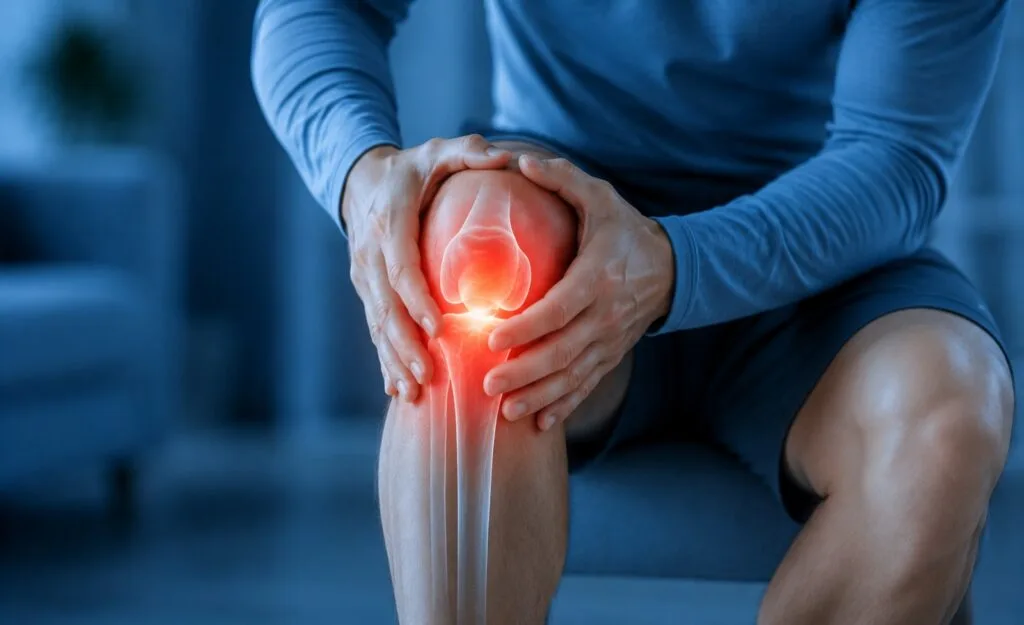
At Birmingham Physiocare Ltd on Pershore Road, Birmingham, every knee pain assessment identifies the specific structure responsible for your symptoms before treatment begins. Our on-site Musculoskeletal Ultrasound provides same-day imaging of the patellar tendon, quadriceps tendon, medial and lateral ligaments, bursae, joint space and surrounding soft tissue confirming the diagnosis without a hospital referral or MRI waiting list. Where joint pain requires injection management, our Ultrasound-Guided Injection delivers corticosteroid or hyaluronic acid precisely into the knee joint or target bursa under direct imaging. Where patellar or quadriceps tendinopathy has not responded to rehabilitation, our Shockwave Therapy directly addresses the tissue-level degeneration that exercise alone cannot resolve.
We treat patients at our clinic on Pershore Road and through our domiciliary home visit service across Birmingham, Selly Oak, Harborne, Edgbaston, Moseley, Sutton Coldfield, Solihull and the wider West Midlands.
Where in the knee the pain is located and what provokes it tells your physiotherapist a great deal about which structure is involved before the physical examination has even begun. Medial knee pain on walking stairs behaves differently to anterior knee pain on prolonged sitting, and both are clinically distinct from the posterolateral pain and locking associated with meniscal pathology. These patterns matter; they determine where the assessment focuses and what treatment is appropriate.
- Pain at the front of the knee around or below the kneecap
- Medial or lateral knee pain on weight-bearing, stairs or squatting
- Swelling around the joint with or without warmth and redness
- Locking, catching or giving way of the knee
- Stiffness that is worst after sitting for a prolonged period or first thing in the morning
- A grinding or crunching sensation during movement
- Pain behind the knee, particularly on full flexion
- Weakness and instability, especially on single-leg activities
- Knee osteoarthritis: Cartilage degeneration in the tibiofemoral or patellofemoral compartments producing pain, stiffness and swelling that worsens with loading. First-line treatment is exercise therapy, with hyaluronic acid injection providing joint lubrication when rehab alone is insufficient.
- Patellofemoral pain syndrome: Anterior knee pain driven by abnormal patellar tracking, quadriceps inhibition and hip abductor weakness, producing pain on stairs, squatting and prolonged sitting.
- Patellar tendinopathy: Degenerative changes in the patellar tendon producing localised infrapatellar pain on loading. A primary indication for Shockwave Therapy when loading programmes have not produced resolution.
- Meniscal pathology: Medial or lateral meniscal tears producing joint line pain, swelling, locking and pain on deep flexion. Conservative management often avoids or delays surgical intervention.
- Ligament injuries: ACL, PCL, MCL and LCL sprains and tears from sporting injuries, requiring structured rehabilitation whether managed conservatively or post-surgically.
- Prepatellar and infrapatellar bursitis: Bursal inflammation at the front of the knee producing localised swelling and tenderness, confirmed by MSK Ultrasound and managed with guided aspiration or injection where indicated.
Get in touch with us
service timing ( Mon to Fri )
09 Am To 6 Pm
service timing ( Sat to Sun )
10:30 Am To 5 Pm
Our Services
What Makes Birmingham Physiocare Different?
Book Your Physiotherapy Assessment!
How We Treat Shoulder pain At Birmingham Physiocare
Musculoskeletal Ultrasound
Same-day imaging of the knee confirming the specific structure involved, differentiating between tendinopathy, bursitis, ligament pathology and joint effusion at the same appointment as your clinical assessment.
Exercise Rehabilitation
The primary treatment for the majority of knee conditions. Quadriceps strengthening, VMO activation, hip abductor and external rotator loading, proprioceptive rehabilitation and progressive return to activity ; each programme built around your specific diagnosis rather than a generic knee exercise protocol.
Shockwave Therapy
For patellar tendinopathy and quadriceps tendinopathy that have not resolved through progressive loading programmes. Direct acoustic energy to the degenerative tendon tissue, stimulating the healing response that chronic tendinopathy has lost.
Manual Therapy
Patellar mobilisation, tibiofemoral joint mobilisation and soft tissue techniques for knee stiffness, osteoarthritis and post-surgical restriction ; improving joint mechanics and reducing pain sufficiently to allow effective rehabilitation loading.
Ultrasound-Guided Injection
Intra-articular corticosteroid for inflammatory flare-up and hyaluronic acid viscosupplementation for knee osteoarthritis ; both placed precisely within the joint space under direct ultrasound visualisation, eliminating the placement inaccuracy of landmark-guided knee injections.
Acupuncture
Periarticular needling for knee osteoarthritis and patellofemoral pain reducing pain and muscle inhibition, improving the quality of quadriceps activation needed for effective rehabilitation loading.
Essential FAQs
Physiotherapy is the recommended first-line treatment for knee osteoarthritis and produces significant, measurable improvements in pain and function in the majority of patients. Exercise therapy strengthens the muscles that support and offload the joint, manual therapy improves joint mechanics and reduces stiffness, and hyaluronic acid injection restores joint lubrication that arthritic cartilage can no longer maintain. Research consistently shows that patients who receive structured physiotherapy before considering surgery experience better outcomes including a significant proportion who no longer require surgery at all. A knee replacement is a major procedure with its own recovery demands. Physiotherapy is always worth a proper, supervised trial first.
Not necessarily and the evidence increasingly supports conservative management as the primary approach for many meniscal tears, particularly degenerative tears in adults over 35. Research shows that the majority of patients deemed surgical candidates who received physiotherapy instead achieved equivalent or better outcomes than those who went straight to surgery. A thorough physiotherapy assessment will determine whether your tear is the primary source of your symptoms, whether it is a structural tear or a degenerative change, and whether a structured rehabilitation programme is likely to produce a satisfactory outcome without surgery.
No. Degenerative changes on imaging are extremely common in adults from their forties onwards and do not determine your prognosis. Many patients with significant radiological findings achieve full resolution of their knee pain through physiotherapy. The degree of degeneration visible on an MRI or X-ray correlates poorly with the severity of symptoms some patients with extensive wear have minimal pain, and some with relatively mild changes are significantly disabled. Your symptoms, your function and your specific diagnosis determine what treatment will work and what your recovery looks like not your imaging report.
Patellofemoral pain is driven by abnormal patellar tracking, quadriceps inhibition and hip weakness producing anterior knee pain on loading the treatment is hip and quadriceps strengthening and movement retraining. Patellar tendinopathy is degenerative change within the patellar tendon itself producing infrapatellar pain specifically on tendon loading ; the treatment requires progressive tendon loading protocols and, where the tendon has not responded, Shockwave Therapy. Treating patellar tendinopathy with the same approach as patellofemoral pain consistently fails because the underlying pathology and the tissue that needs to be loaded are different. Accurate diagnosis at the outset determines which approach is applied and MSK Ultrasound at your first appointment confirms the diagnosis rather than leaving it as a clinical assumption.
Struggling With Knee Pain?
Get expert assessment and diagnosis at our clinic on 650 Pershore Road, B29 7NX or in the comfort of your own home across Birmingham & the West Midlands.
Instant confirmation • Free parking