Info@birminghamphysiocare.co.uk
01213300272
+447743087832
650 Pershore Road, Birmingham, B29 7NX

- Clinic Overview
- TREATMENTS
- Manual Therapy
- Shockwave Therapy
- Low Level Laser Therapy (LLLT)
- Musculoskeletal MSK Ultrasound
- Ultrasound-Guided Injections
- Sports Massage
- Sports Injury Rehabilitation
- Post-Surgical & Injury Rehabilitation
- Chronic Pain Management
- Cupping Therapy
- Acupuncture & Dry Needling
- Workplace Assessments
- Exercise Rehabilitation
- MUSCULOSKELETAL
- NEUROLOGICAL
- ORTHOPAEDIC
- ELDERLY
- SPORTS
- HOME VISITS
- Pricing
- Contact Us
- Blogs & Case Studies

Professional Domiciliary Physiotherapy Services Delivered to Your Door Step
- Clinic Overview
- TREATMENTS
- Manual Therapy
- Shockwave Therapy
- Low Level Laser Therapy (LLLT)
- Musculoskeletal MSK Ultrasound
- Ultrasound-Guided Injections
- Sports Massage
- Sports Injury Rehabilitation
- Post-Surgical & Injury Rehabilitation
- Chronic Pain Management
- Cupping Therapy
- Acupuncture & Dry Needling
- Workplace Assessments
- Exercise Rehabilitation
- MUSCULOSKELETAL
- NEUROLOGICAL
- ORTHOPAEDIC
- ELDERLY
- SPORTS
- HOME VISITS
- Pricing
- Contact Us
- Blogs & Case Studies
- Clinic Overview
- TREATMENTS
- Manual Therapy
- Shockwave Therapy
- Low Level Laser Therapy (LLLT)
- Musculoskeletal MSK Ultrasound
- Ultrasound-Guided Injections
- Sports Massage
- Sports Injury Rehabilitation
- Post-Surgical & Injury Rehabilitation
- Chronic Pain Management
- Cupping Therapy
- Acupuncture & Dry Needling
- Workplace Assessments
- Exercise Rehabilitation
- MUSCULOSKELETAL
- NEUROLOGICAL
- ORTHOPAEDIC
- ELDERLY
- SPORTS
- HOME VISITS
- Pricing
- Contact Us
- Blogs & Case Studies
SPINAL MUSCULAR ATROPHY PHYSIOTHERAPY · BIRMINGHAM PHYSIOCARE
SMA Gets Stronger With Treatment. So Can You.
Spinal muscular atrophy is a genetic neuromuscular condition causing progressive loss of motor neuron function and the muscle weakness that follows. For patients and families managing SMA, physiotherapy is not an optional supplement to medical treatment it is a clinical necessity. Research published in 2025 confirms that combining pharmacotherapy with intensive physiotherapy produces significantly better motor outcomes than medication alone. Physiotherapy preserves the muscle strength and joint mobility that SMA progressively targets, maintains respiratory function through postural and breathing support, and sustains the functional independence that determines quality of life across every stage of the condition.
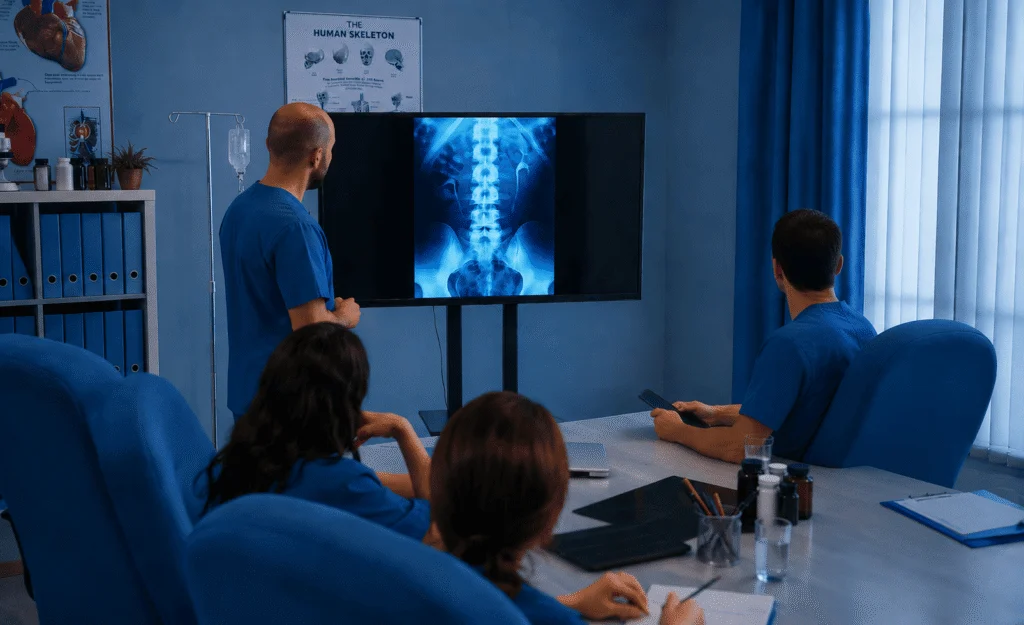
At Birmingham Physiocare Ltd on Pershore Road in Birmingham, our specialist physiotherapists deliver SMA rehabilitation built on current evidence strengthening exercises, aerobic conditioning, postural management, joint range of movement programmes and fatigue-paced activity planning tailored to the functional level and stage of the individual patient. SMA presents very differently between patients depending on type, age of onset and current disease-modifying treatment status and every programme at Birmingham Physiocare reflects that individual picture rather than a standard neuromuscular protocol.
We treat at our clinic and through our domiciliary home visit service across Birmingham, Harborne, Edgbaston, Selly Oak, Moseley, Sutton Coldfield, Solihull and the wider West Midlands.
SMA affects every patient differently depending on type and functional level. What connects every presentation is the progressive nature of motor neuron loss and the role physiotherapy plays in preserving the function that remains.
Presentations and functional challenges we address
- Progressive muscle weakness: Affecting proximal limb, trunk and respiratory muscles. Physiotherapy focuses on maintaining strength in muscle groups with remaining innervation without overloading those significantly affected.
- Reduced joint range and contractures: Stretching programmes, positioning strategies and splinting guidance help prevent contractures that compound functional limitation and accelerate the need for surgery.
- Postural management and spinal alignment: Scoliosis is a significant risk in SMA. Postural programmes and appropriate exercise reduce the rate of progression and support respiratory function through better alignment.
- Fatigue management: SMA muscle fatigue occurs at lower thresholds and recovers slowly. Activity pacing strategies preserve energy for meaningful daily function without triggering overexertion.
- Ambulatory function and walking rehab: For ambulatory patients, progressive strengthening and gait rehabilitation maintain walking ability and delay functional decline.
- Upper limb function: For non-ambulatory patients, targeted strengthening and functional task practice preserves the hand and arm function necessary for self-care and independence.
Get in touch with us
service timing ( Mon to Fri )
09 Am To 6 Pm
service timing ( Sat to Sun )
10:30 Am To 5 Pm
Our Services
Birmingham Physiocare In a nutshell
What Makes Birmingham Physiocare Different?
Book Your Physiotherapy Assessment!
How We Treat Spinal Muscular Atrophy At Birmingham Physiocare
SMA
TREATMENT HUB BIRMINGHAM PHYSIOCARE
TREATMENT HUB BIRMINGHAM PHYSIOCARE
Strengthening
Joint Mobility
Postural/Respiratory
Functional Rehab
Home Visits
Evidence-Based 2025
Progressive strengthening and aerobic training
2025 research confirms that strengthening exercises and aerobic training produce measurable improvements in motor function and quality of life in SMA without worsening the condition.
Programmes are designed around the patient's current functional level, avoiding overexertion of already significantly weakened muscle groups while progressively challenging those with remaining capacity.
Contracture Prevention
Joint range of movement and stretching
Daily or regular stretching programmes targeting the joints most vulnerable to contracture in each patient's specific presentation, combined with positioning guidance for sitting, lying and activity to maintain tissue length and joint mobility between sessions.
Respiratory Integrity
Postural and respiratory support
Postural management advice, seating and positioning assessment and trunk stability exercises to maintain spinal alignment and support the respiratory function that postural collapse compromises.
Liaison with respiratory teams where ventilatory support is part of the patient's medical management.
Task-Specific Training
Functional rehabilitation and activity practice
Task-specific practice of the daily activities that SMA is affecting, graded to the patient's current capacity and progressively advanced as strength and endurance allow.
For ambulatory patients this includes gait training and falls prevention. For non-ambulatory patients this focuses on transfers, seating function and upper limb independence.
West Midlands Coverage
Home visit rehabilitation through our domiciliary service
For SMA patients for whom clinic attendance is not practical, the same specialist rehabilitation delivered at home across Birmingham and the West Midlands.
The home environment allows us to assess the real functional demands of the patient's daily life and direct treatment precisely where it matters most.
Commonly Asked Questions About Spinal Muscular Atrophy
Essential FAQs
Yes with appropriate clinical guidance. Research confirms that strengthening exercises and aerobic training do not worsen SMA and produce measurable improvements in motor function and quality of life when delivered at the right intensity for the patient's functional level. The key clinical principle is avoiding overexertion of significantly weakened muscle groups while progressively loading those with remaining capacity. Your physiotherapist at Birmingham Physiocare designs a programme specifically calibrated to your SMA type, functional level and current disease-modifying treatment status not a generic exercise protocol applied without regard to the specific demands of the condition.
SMA is caused by loss of lower motor neurons rather than upper motor neuron damage as in stroke or TBI which means spasticity is not a feature and the rehabilitation principles differ significantly from other neurological conditions. The primary focus in SMA is preserving the function of muscle groups with remaining innervation, preventing contracture and postural deterioration, managing fatigue intelligently and maintaining the respiratory function that postural decline threatens. The programme is also adjusted around any disease-modifying medication the patient is receiving nusinersen, risdiplam or onasemnogene as pharmacotherapy and physiotherapy together consistently produce better outcomes than either alone.
As early as possible following diagnosis. Early physiotherapy intervention in SMA establishes baseline function, introduces postural management before contractures develop, maintains joint range of movement from the outset and supports the family with the practical knowledge needed to carry out daily exercises and positioning between sessions. The combination of early disease-modifying treatment and early intensive physiotherapy produces significantly better motor outcomes than pharmacotherapy alone and the window for establishing good physiotherapy habits is most valuable in the early stages of the condition.
Yes. Adults with long-standing SMA continue to benefit from specialist physiotherapy throughout life maintaining the strength and function that remains, managing the secondary complications of postural change and reduced activity, and preserving the upper limb and respiratory function that independence depends on. Regular physiotherapy review is also important as the condition changes ensuring the programme adapts to evolving functional capacity rather than continuing an approach that no longer reflects the patient's current presentation.
📍 Same-Day Appointments
Looking for SMA Physiotherapy In Birmingham
Get expert assessment and diagnosis at our clinic on 650 Pershore Road, B29 7NX or in the comfort of your own home across Birmingham & the West Midlands.
✓ No GP referral required
✓ Direct specialist access
✓ Same-week appointments
Call us now — speak to a physio
0121 330 0272
or
Book Your Appointment
Instant confirmation • Free parking