Info@birminghamphysiocare.co.uk
01213300272
+447743087832
650 Pershore Road, Birmingham, B29 7NX

- Clinic Overview
- TREATMENTS
- Manual Therapy
- Shockwave Therapy
- Low Level Laser Therapy (LLLT)
- Musculoskeletal MSK Ultrasound
- Ultrasound-Guided Injections
- Sports Massage
- Sports Injury Rehabilitation
- Post-Surgical & Injury Rehabilitation
- Chronic Pain Management
- Cupping Therapy
- Acupuncture & Dry Needling
- Workplace Assessments
- Exercise Rehabilitation
- MUSCULOSKELETAL
- NEUROLOGICAL
- ORTHOPAEDIC
- ELDERLY
- SPORTS
- HOME VISITS
- Pricing
- Contact Us
- Blogs & Case Studies

Professional Domiciliary Physiotherapy Services Delivered to Your Door Step
- Clinic Overview
- TREATMENTS
- Manual Therapy
- Shockwave Therapy
- Low Level Laser Therapy (LLLT)
- Musculoskeletal MSK Ultrasound
- Ultrasound-Guided Injections
- Sports Massage
- Sports Injury Rehabilitation
- Post-Surgical & Injury Rehabilitation
- Chronic Pain Management
- Cupping Therapy
- Acupuncture & Dry Needling
- Workplace Assessments
- Exercise Rehabilitation
- MUSCULOSKELETAL
- NEUROLOGICAL
- ORTHOPAEDIC
- ELDERLY
- SPORTS
- HOME VISITS
- Pricing
- Contact Us
- Blogs & Case Studies
- Clinic Overview
- TREATMENTS
- Manual Therapy
- Shockwave Therapy
- Low Level Laser Therapy (LLLT)
- Musculoskeletal MSK Ultrasound
- Ultrasound-Guided Injections
- Sports Massage
- Sports Injury Rehabilitation
- Post-Surgical & Injury Rehabilitation
- Chronic Pain Management
- Cupping Therapy
- Acupuncture & Dry Needling
- Workplace Assessments
- Exercise Rehabilitation
- MUSCULOSKELETAL
- NEUROLOGICAL
- ORTHOPAEDIC
- ELDERLY
- SPORTS
- HOME VISITS
- Pricing
- Contact Us
- Blogs & Case Studies
STROKE REHABILITATION PHYSIOTHERAPY · BIRMINGHAM PHYSIOCARE
Recovery After Stroke Does Not Have A Deadline. Progress Is Still Possible.
The most damaging thing said to stroke survivors in Birmingham is that they have reached their plateau. That after a certain point six months, a year, two years the brain has done what it can and further recovery is unlikely. This is not supported by current neuroscience. The brain retains the capacity for neuroplasticity the ability to form new pathways and adapt function throughout life. What determines whether that capacity is realised is not the time elapsed since the stroke. It is whether the right rehabilitation is being delivered consistently enough to drive it.
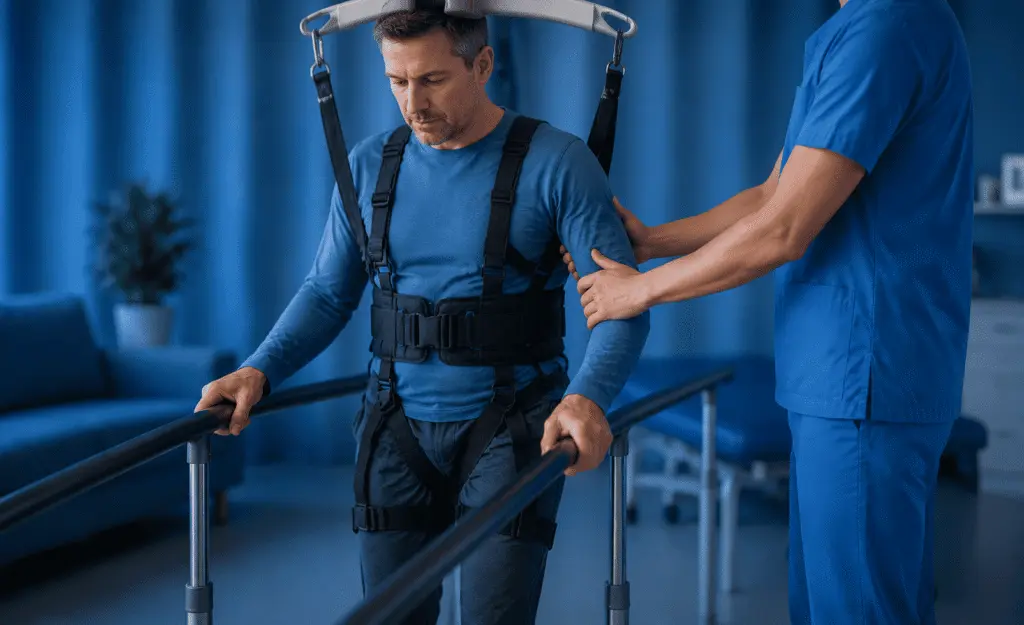
At Birmingham Physiocare Ltd on Pershore Road, our specialist neurological physiotherapists deliver stroke rehabilitation that is built on neuroplasticity principles using targeted, repetitive, functional movement to stimulate the brain to rewire the pathways the stroke has disrupted. We work with patients at every stage of recovery, from early post-discharge rehabilitation through to patients years post-stroke who have been told nothing more can be achieved.
We treat at our clinic and through our domiciliary home visit service across Birmingham, Harborne, Edgbaston, Selly Oak, Moseley, Sutton Coldfield, Solihull and the wider West Midlands bringing rehabilitation to patients for whom leaving home remains difficult or impossible.
Stroke affects every survivor differently depending on which area of the brain was damaged, the extent of the event and the speed of initial medical intervention. The physical consequences vary widely but these are the presentations our specialist physiotherapists assess and treat at Birmingham Physiocare.
Common post-stroke presentations we treat
- Weakness or paralysis affecting one side of the body arm, leg or both
- Difficulty walking altered gait pattern, foot drop, reduced balance and coordination
- Spasticity and muscle stiffness preventing normal movement
- Upper limb dysfunction difficulty reaching, gripping and performing fine motor tasks
- Balance impairment and falls risk
- Fatigue that limits the duration and intensity of rehabilitation
- Shoulder pain on the affected side a frequent secondary complication of post-stroke shoulder subluxation
- Reduced sensation and proprioception affecting movement quality and safety
- Difficulty with transfers moving from sitting to standing, getting in and out of bed
Who we work with
- Recent Hospital Discharges: Patients recently discharged from hospital or community stroke rehabilitation who need continued specialist input to maximize recovery.
- Long-term Recovery: Patients months or years post-stroke whose progress has stalled or who were told they had reached their plateau.
- Home-bound Patients: Patients who cannot attend a clinic due to mobility, fatigue or complexity receiving rehabilitation through our domiciliary service.
- Family & Carers: Family members and carers who need guidance on how to support rehabilitation and safe handling between professional sessions.
Get in touch with us
service timing ( Mon to Fri )
09 Am To 6 Pm
service timing ( Sat to Sun )
10:30 Am To 5 Pm
Our Services
Birmingham Physiocare In a nutshell
What Makes Birmingham Physiocare Different?
Book Your Physiotherapy Assessment!
How We Treat Stroke Rehabilitation At Birmingham Physiocare
STROKE REHAB
PRINCIPLES & CARE
Movement Rehab
Spasticity Mgmt
Gait & Falls
Upper Limb
Home Visits
Neuroplasticity-Based
Movement Rehabilitation
Every stroke rehabilitation programme at Birmingham Physiocare is built around three principles: accurate assessment of current function, neuroplasticity-based treatment designed to drive brain reorganisation, and goals that are meaningful to the individual patient not generic rehabilitation milestones.
Repetitive, task-specific movement practice targeting specific functional deficits. Walking re-education, balance rehabilitation and transfer practice are delivered with the frequency and specificity necessary to drive meaningful change in brain pathway organisation.
Tone Management
Spasticity Management
Hands-on techniques to reduce muscle tone in the affected limbs, combined with positioning advice, stretching programmes and where relevant liaison with your medical team regarding tone management medication or botulinum toxin.
Safety & Independence
Gait Rehabilitation and Falls Prevention
Detailed assessment of your walking pattern, identification of the specific gait deviations present (foot drop, circumduction, hip hiker, reduced arm swing) and targeted rehabilitation to address each one.
Balance training and falls risk reduction is particularly important for patients living alone or with limited carer support.
Functional Task Practice
Upper Limb Rehabilitation
Functional task practice, graded reaching and grasping activities, sensory retraining and strengthening for the affected arm and hand.
Using repetition and task specificity to stimulate cortical reorganisation in the motor pathways controlling upper limb function.
Domiciliary Service
Home Visit Rehabilitation
For patients who cannot attend our clinic, the same specialist rehabilitation is delivered at home. The home environment provides unique clinical information.
We observe how you manage your actual living space, identify specific barriers to independence, and direct treatment at what matters most in your daily life.
Commonly Asked Questions About Stroke Rehabilitation
Essential FAQs
No. The brain's capacity for neuroplasticity does not switch off at a fixed point after stroke. Research consistently shows that stroke survivors make meaningful functional gains years and even decades after their initial event when provided with appropriately intensive and specifically targeted rehabilitation. The key variables are not time since stroke but the specificity, frequency and consistency of rehabilitation being delivered. Patients told they have reached their plateau at Birmingham Physiocare regularly achieve progress that contradicts that prognosis because the rehabilitation they receive is built on neuroplasticity principles rather than general exercise.
The period immediately following a stroke is when neuroplasticity is most active the brain is at its most responsive to rehabilitation input in the days and weeks after the event. Early, intensive and specifically targeted physiotherapy in this window directly improves long-term functional outcomes. If you have recently been discharged from hospital stroke care and your rehabilitation input has reduced or stopped, contact us immediately the early post-stroke period is not the time to wait for a routine referral to come through.
Yes even in limbs with minimal voluntary movement, physiotherapy produces measurable changes in function over time when the right approach is applied consistently. Repetitive, task-specific movement practice even at very low movement levels stimulates the cortical reorganisation that underpins recovery. Sensory stimulation, positioning, tone management and graded active-assisted movement are all applied in the early stages to maintain tissue health and begin the neuroplasticity process. The degree of recovery possible varies between patients and depends on the extent and location of the stroke but the absence of movement at the outset is not a reason to withhold rehabilitation input.
NHS stroke rehabilitation is time-limited patients typically receive a defined course of community rehabilitation following hospital discharge, after which input reduces or stops. Birmingham Physiocare provides ongoing specialist rehabilitation with no arbitrary time limit continuing for as long as meaningful progress is being made or maintained. Our home visit model also means patients who cannot attend a clinic receive the same specialist input rather than being limited to whatever community provision is available. Patients who have completed their NHS rehabilitation entitlement and still have rehabilitation potential are exactly the group we work with most frequently.
📍 Same-Day Appointments
Looking For Stroke Rehabilitation? In Birmingham
Get expert assessment and diagnosis at our clinic on 650 Pershore Road, B29 7NX or in the comfort of your own home across Birmingham & the West Midlands.
✓ No GP referral required
✓ Direct specialist access
✓ Same-week appointments
Call us now — speak to a physio
0121 330 0272
or
Book Your Appointment
Instant confirmation • Free parking