Info@birminghamphysiocare.co.uk
01213300272
+447743087832
650 Pershore Road, Birmingham, B29 7NX

- Clinic Overview
- TREATMENTS
- Manual Therapy
- Shockwave Therapy
- Low Level Laser Therapy (LLLT)
- Musculoskeletal MSK Ultrasound
- Ultrasound-Guided Injections
- Sports Massage
- Sports Injury Rehabilitation
- Post-Surgical & Injury Rehabilitation
- Chronic Pain Management
- Cupping Therapy
- Acupuncture & Dry Needling
- Workplace Assessments
- Exercise Rehabilitation
- MUSCULOSKELETAL
- NEUROLOGICAL
- ORTHOPAEDIC
- ELDERLY
- SPORTS
- HOME VISITS
- Pricing
- Contact Us
- Blogs & Case Studies

Professional Domiciliary Physiotherapy Services Delivered to Your Door Step
- Clinic Overview
- TREATMENTS
- Manual Therapy
- Shockwave Therapy
- Low Level Laser Therapy (LLLT)
- Musculoskeletal MSK Ultrasound
- Ultrasound-Guided Injections
- Sports Massage
- Sports Injury Rehabilitation
- Post-Surgical & Injury Rehabilitation
- Chronic Pain Management
- Cupping Therapy
- Acupuncture & Dry Needling
- Workplace Assessments
- Exercise Rehabilitation
- MUSCULOSKELETAL
- NEUROLOGICAL
- ORTHOPAEDIC
- ELDERLY
- SPORTS
- HOME VISITS
- Pricing
- Contact Us
- Blogs & Case Studies
- Clinic Overview
- TREATMENTS
- Manual Therapy
- Shockwave Therapy
- Low Level Laser Therapy (LLLT)
- Musculoskeletal MSK Ultrasound
- Ultrasound-Guided Injections
- Sports Massage
- Sports Injury Rehabilitation
- Post-Surgical & Injury Rehabilitation
- Chronic Pain Management
- Cupping Therapy
- Acupuncture & Dry Needling
- Workplace Assessments
- Exercise Rehabilitation
- MUSCULOSKELETAL
- NEUROLOGICAL
- ORTHOPAEDIC
- ELDERLY
- SPORTS
- HOME VISITS
- Pricing
- Contact Us
- Blogs & Case Studies
LASER THERAPY · BIRMINGHAM PHYSIOCARE
Light That Reaches What Rest Cannot.
Chronic tendon pain that has not responded to rest, standard physiotherapy or medication often persists because the tissue itself has stopped repairing at a cellular level. Low Level Laser Therapy, LLLT, addresses that directly. Specific wavelengths of light are applied to the skin overlying the affected tendon or joint, penetrating into the tissue to influence cellular metabolism, reduce inflammation and support tissue repair, without heat, without needles and without any recovery time afterwards.
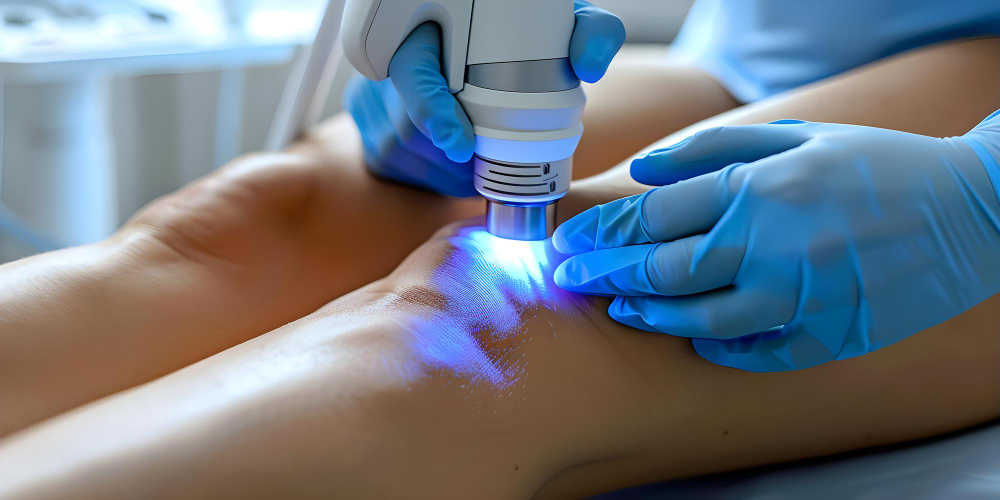
Precision matters as much as the treatment itself. Applied to the wrong location or at the wrong dose, laser therapy does very little. Applied directly over the confirmed site of pathology, at the correct parameters for the tissue involved, it becomes a genuinely effective tool for chronic conditions that have plateaued elsewhere.
At Birmingham Physiocare Ltd on Pershore Road in Birmingham, laser therapy is delivered following a full clinical assessment and, where indicated, MSK Ultrasound confirmation of the target structure, ensuring your treatment is applied exactly where it needs to be, not just in the general area where the pain is felt.
The clinical evidence for LLLT depends heavily on correct dose and precise location, applying laser to the skin directly overlying the affected structure rather than the general area of pain. This is the standard your treatment is held to at Birmingham Physiocare.
Where Laser Therapy Delivers Results
- Chronic Tendinopathy: The 2001 Bjordal systematic review found a pooled mean pain reduction of 21 to 32% across trials using validated treatment protocols, specifically noting that trials failing to meet location-specific dosage criteria were excluded from the positive findings, confirming precision of application is what separates an effective session from an ineffective one.
- Shoulder Impingement and Rotator Cuff Tendinopathy: The Haslerud systematic review found LLLT as monotherapy produced a weighted mean difference of 20.41mm pain reduction on the visual analogue scale over placebo, and 16.00mm when combined with exercise therapy, both statistically significant findings across 17 randomised controlled trials.
- Midportion Achilles Tendinopathy: A randomised controlled trial conducted at the Sports Injury Centre, Vardhman Mahavir Medical College, comparing eccentric exercise combined with LLLT against eccentric exercise with placebo laser, measured outcomes using the VISA-A score across 24 weeks, with imaging evidence from related research showing reduced inflammatory signal intensity on MRI and ultrasound following treatment.
- Myofascial Pain and Trigger Points: Clinical trial data registered with ClinicalTrials.gov has evaluated LLLT specifically for myofascial pain syndrome, building on the documented capacity of coherent laser light to modify cellular metabolism and reduce localised inflammation and swelling.
- Adjunct To Manual Therapy and Exercise: The 2025 Yap and Lim meta-analysis specifically investigated how LLLT parameters influence effect size, informing precise dosing decisions when laser is integrated alongside manual therapy and exercise rehabilitation rather than delivered as an isolated treatment.
Get in touch with us
service timing ( Mon to Fri )
09 Am To 6 Pm
service timing ( Sat to Sun )
10:30 Am To 5 Pm
Our Treatments
Birmingham Physiocare In a nutshell
What Makes Birmingham Physiocare Different?
Book Your Physiotherapy Assessment !
Dose And Location Matched To Evidence
Every laser session follows the parameters research confirms are necessary for genuine effect, targeted directly over the confirmed structure rather than a general treatment area.
Diagnosis Confirmed First
Where the exact tissue involved needs confirming before treatment, MSK Ultrasound is available at the same appointment.
Home Visits Across Birmingham
Our domiciliary service extends cupping therapy to your home across Birmingham and the West Midlands where clinically appropriate.
HCPC & MCSP Registered
Chartered Physiotherapist with specialist laser therapy training. Fully regulated and accountable to professional standards.
PRECISE DOSE. PRECISE LOCATION. EVIDENCE BEHIND BOTH.
From First Appointment To Full Recovery
LASER RX
BIRMINGHAM PHYSIOCARE
Step 1: Structural Confirmation
Step 2: Targeted Dosage
Step 3: Functional Integration
Target Localization
Step 1: Confirm The Target Structure
Your physiotherapist assesses the affected area and, where diagnostic clarity would change the treatment approach, performs MSK Ultrasound to confirm the exact tendon or soft tissue structure involved.
This matters directly because the research underpinning laser therapy repeatedly identifies location-specific dosage as the factor separating trials that show a genuine effect from those that do not.
Evidence-Based Application
Step 2: Deliver Laser At The Evidence-Based Dose
The laser device is applied directly to the skin overlying the confirmed treatment site. The session is painless, involves no heat sensation and typically lasts a matter of minutes per treatment area.
Parameters are set according to the specific tissue and condition being treated, reflecting the dose-response relationship established across the clinical trial evidence.
Active Rehabilitation
Step 3: Combine With Movement For A Lasting Result
Systematic review evidence consistently shows stronger outcomes when laser therapy is combined with exercise rather than delivered alone.
Your physiotherapist integrates exercise rehabilitation or manual therapy alongside your laser sessions, giving the tissue-level effect of the laser a structured loading programme to build on.
TESTIMONIALS
What Our Patients Say About Their Journey

Months of shoulder pain that had not responded to standard physiotherapy. Birmingham Physiocare explained the evidence behind laser therapy clearly before we started, which gave me confidence it was not just an add-on treatment. Combined with the exercises they gave me, the improvement over six weeks was genuinely significant.
I was sceptical about laser therapy until Birmingham Physiocare walked me through exactly how it was being applied and why the dose mattered. Combined with the loading exercises, my Achilles pain reduced steadily over the course rather than the temporary relief I had experienced elsewhere.
Persistent elbow pain that painkillers were only masking. The laser sessions at Birmingham Physiocare were quick, completely painless, and the physiotherapist was upfront about what to realistically expect rather than overselling it. Noticeable improvement by the fourth session.
Frequently Asked Questions About Laser Therapy at Birmingham
Essential FAQs
Yes, and the evidence is specific rather than general. A 2001 systematic review by Bjordal and colleagues found LLLT reduced pain in chronic tendinopathy by a pooled mean of up to 32% compared with placebo when validated dosing protocols were used. A 2025 meta-analysis by Yap and Lim, reviewing 35 clinical controlled trials, confirmed superior pain relief in chronic tendinopathy over minimal intervention. The evidence consistently depends on correct dose and precise treatment location, which is why assessment before treatment matters.
No. The treatment is entirely painless, involves no heat and no needles. Most patients feel nothing beyond the device being held against the skin for the duration of the session.
The clinical trials underpinning laser therapy's evidence base used courses of treatment delivered at least twice weekly for a minimum of six sessions, as specified in the original Bjordal review's inclusion criteria for validated trials. Your physiotherapist will confirm a course length appropriate to your specific condition at your first appointment.
Systematic review evidence, including the Haslerud shoulder tendinopathy review, found LLLT combined with exercise therapy produced significant global improvement rates over placebo. At Birmingham Physiocare it is typically integrated alongside manual therapy or exercise rehabilitation rather than delivered in isolation
The strongest evidence exists for chronic tendinopathy conditions, including shoulder impingement, Achilles tendinopathy and other sub-acute or chronic tendon presentations that have not fully resolved through rest or standard treatment. Your physiotherapist will confirm suitability based on your specific diagnosis.
This depends on your specific presentation and how your tissue responds. Some patients notice an immediate change in flexibility and tension following a single session, as demonstrated in randomised trial data on lumbar spine flexibility, while ongoing tightness or restriction may benefit from a short structured course integrated within your wider treatment plan.
SAME-DAY DIAGNOSTIC IMAGING
Looking for Laser Therapy In Birmingham?
Evidence based LLLT with precise, condition-specific dosing at 650 Pershore Road, Selly Oak, Birmingham B29 7NX. Speak to our specialist team today.
✓ Evidence-based LLLT
✓ Condition-specific dosing
✓ Specialist physio team
Call us now — speak to a physio
0121 330 0272
or
Book Your Appointment
Instant confirmation • Free parking