Info@birminghamphysiocare.co.uk
01213300272
+447743087832
650 Pershore Road, Birmingham, B29 7NX

- Clinic Overview
- TREATMENTS
- Manual Therapy
- Shockwave Therapy
- Low Level Laser Therapy (LLLT)
- Musculoskeletal MSK Ultrasound
- Ultrasound-Guided Injections
- Sports Massage
- Sports Injury Rehabilitation
- Post-Surgical & Injury Rehabilitation
- Chronic Pain Management
- Cupping Therapy
- Acupuncture & Dry Needling
- Workplace Assessments
- Exercise Rehabilitation
- MUSCULOSKELETAL
- NEUROLOGICAL
- ORTHOPAEDIC
- ELDERLY
- SPORTS
- HOME VISITS
- Pricing
- Contact Us
- Blogs & Case Studies

Professional Domiciliary Physiotherapy Services Delivered to Your Door Step
- Clinic Overview
- TREATMENTS
- Manual Therapy
- Shockwave Therapy
- Low Level Laser Therapy (LLLT)
- Musculoskeletal MSK Ultrasound
- Ultrasound-Guided Injections
- Sports Massage
- Sports Injury Rehabilitation
- Post-Surgical & Injury Rehabilitation
- Chronic Pain Management
- Cupping Therapy
- Acupuncture & Dry Needling
- Workplace Assessments
- Exercise Rehabilitation
- MUSCULOSKELETAL
- NEUROLOGICAL
- ORTHOPAEDIC
- ELDERLY
- SPORTS
- HOME VISITS
- Pricing
- Contact Us
- Blogs & Case Studies
- Clinic Overview
- TREATMENTS
- Manual Therapy
- Shockwave Therapy
- Low Level Laser Therapy (LLLT)
- Musculoskeletal MSK Ultrasound
- Ultrasound-Guided Injections
- Sports Massage
- Sports Injury Rehabilitation
- Post-Surgical & Injury Rehabilitation
- Chronic Pain Management
- Cupping Therapy
- Acupuncture & Dry Needling
- Workplace Assessments
- Exercise Rehabilitation
- MUSCULOSKELETAL
- NEUROLOGICAL
- ORTHOPAEDIC
- ELDERLY
- SPORTS
- HOME VISITS
- Pricing
- Contact Us
- Blogs & Case Studies
ANKLE SURGERY REHABILITATION · BIRMINGHAM PHYSIOCARE
Walking Confidently Again After Ankle Surgery Starts With The Right Rehabilitation.
The ankle bears the full weight of the body with every step which makes post-surgical rehabilitation both more demanding and more consequential than most patients anticipate. Whether the surgery was for a ligament reconstruction, an ankle fracture fixation, Achilles tendon repair, ankle fusion or ankle replacement, the return to normal walking and daily function requires a systematic, staged rehabilitation programme that respects the healing biology of the repaired structure while progressively restoring the strength, range of movement and proprioception that surgery and immobilisation together deplete.
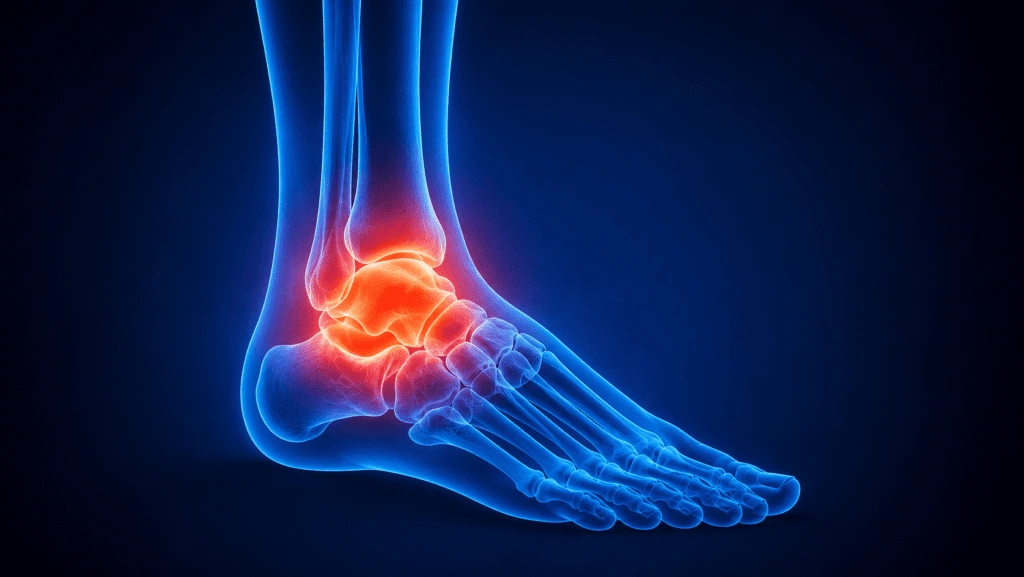
At Birmingham Physiocare Ltd on Pershore Road in Birmingham, ankle surgery rehabilitation is built around the specific procedure performed, your consultant’s post-operative protocol and the functional demands of your daily life and activity goals. We accept patients at any stage of ankle surgery recovery from early post-boot mobilisation through to patients whose recovery has plateaued and who need a fresh, targeted approach to reach their functional goals.
We treat at our clinic and through our domiciliary home visit service across Birmingham, Harborne, Edgbaston, Selly Oak, Moseley, Sutton Coldfield, Solihull and the wider West Midlands.
Ankle surgery rehabilitation shares a common challenge across all procedure types the ankle’s proprioceptive system, which controls balance and positional awareness, is profoundly disrupted by both the original injury and the surgery itself. Restoring this system is as important as restoring strength and range of movement, and it is the element most consistently omitted from inadequate post-surgical programmes.
Procedures we rehabilitate
- Ankle ligament reconstruction: Lateral ankle ligament reconstruction following chronic instability or failed conservative management. Rehabilitation progresses from protected mobilisation through progressive weight-bearing, balance and proprioceptive training, and systematic return to sport or activity.
- Ankle fracture fixation: Open reduction and internal fixation of malleolar and pilon fractures. Weight-bearing restrictions vary significantly by fracture pattern and fixation quality. Rehabilitation within the permitted parameters begins early, progressing to full loading, range of movement restoration and functional rehabilitation as bone healing allows.
- Achilles tendon repair: Surgical repair of a complete Achilles tendon rupture follows one of the most demanding rehabilitation timelines in orthopaedic physiotherapy. Progressive weight-bearing in an equinus boot, gradual heel raise wean, progressive calf loading and return to running follow a twelve to twenty-four month timeline depending on the repair and functional goals.
- Ankle fusion and total ankle replacement: Restoration of function following ankle arthrodesis or arthroplasty, with rehabilitation focused on maximising the function available within the changed mechanics of the fused or replaced ankle joint.
Get in touch with us
service timing ( Mon to Fri )
09 Am To 6 Pm
service timing ( Sat to Sun )
10:30 Am To 5 Pm
Our Services
Birmingham Physiocare In a nutshell
What Makes Birmingham Physiocare Different?
Book Your Physiotherapy Assessment!
How We Treat Ankle Replacement Rehabilitation At Birmingham Physiocare
ANKLE REHAB
BIRMINGHAM PHYSIOCARE
Exercise Rehab
Proprioception
Manual Therapy
Gait Rehab
Home Visits
Careful Load Progression
Exercise rehabilitation
Progressive calf strengthening, ankle dorsiflexion restoration, intrinsic foot muscle activation and lower limb loading programmes specific to the procedure and recovery phase.
Calf strength rehabilitation after Achilles repair and ankle fracture fixation requires particularly careful progression ; the loading demands of the calf complex during walking and running are substantial and insufficient strength at the point of return to activity is the primary cause of re-injury.
Instability Prevention
Proprioceptive and balance rehabilitation
Systematic progression from supported single-leg balance through dynamic balance tasks, reactive balance training and sport-specific balance demands.
Proprioceptive deficit following ankle surgery persists long after strength and range of movement have recovered ; and its absence is what causes the chronic instability and re-injury risk that follows inadequately rehabilitated ankle surgery.
Joint Mobilisation
Manual therapy
Talocrural and subtalar joint mobilisation to restore dorsiflexion range of movement, which is the most commonly restricted movement after ankle surgery and the one most critical to normal gait mechanics and safe stair descent.
Walking Re-education
Gait rehabilitation
Systematic walking re-education from the point of full weight-bearing, addressing the antalgic gait patterns that develop during the protected phase and which become habitual without targeted correction.
Early Phase Domiciliary
Home visit rehabilitation through our domiciliary service
For patients in the boot phase or early weight-bearing period when getting to a clinic is genuinely difficult, specialist rehabilitation delivered at home across Birmingham and the West Midlands.
Commonly Asked Questions About ANKLE REPLACEMENT REHABILITATION
Essential FAQs
In most cases, physiotherapy begins before full weight-bearing is permitted working within whatever weight-bearing restrictions your consultant has set. Upper body and core conditioning, non-weight-bearing ankle range of movement exercises, oedema management and walking aid training are all deliverable from the earliest post-surgical days. Waiting until you are fully weight-bearing before beginning physiotherapy consistently produces worse outcomes than beginning within the permitted parameters from the point of discharge. Contact Birmingham Physiocare directly from discharge and we will begin rehabilitation within your surgical restrictions immediately.
Ankle swelling after surgery is normal and typically persists longer than patients expect particularly after fracture fixation and ligament reconstruction where the surgical trauma is significant. Persistent swelling is managed through elevation, compression, progressive movement and careful loading progression. It is important to note that swelling itself inhibits normal muscle activation around the ankle managing it effectively is therefore a direct rehabilitation priority, not simply a comfort issue. If swelling is worsening rather than gradually reducing, or is accompanied by increasing rather than decreasing pain, contact your surgical team rather than waiting for your next planned appointment.
Achilles tendon repair rehabilitation is one of the longest post-surgical rehabilitation timelines in musculoskeletal physiotherapy. Return to walking without a boot typically occurs at ten to twelve weeks. Return to jogging is typically not attempted before six months and only when the calf has achieved at least 90% of the strength of the unaffected side. Return to sport and full activity typically takes twelve to twenty-four months depending on the demands of the activity and the patient's functional goals. Patients who attempt to return to running or sport before adequate calf strength is confirmed have a significantly elevated risk of re-rupture a complication that dramatically worsens the long-term prognosis.
Proprioceptive deficit reduced positional awareness and balance persists after ankle surgery far longer than most patients expect, and far longer than strength or range of movement deficits in most cases. The nerve endings in the ankle ligaments and joint capsule that provide balance information are disrupted by the original injury, the surgery and the immobilisation that follows. Restoring proprioception requires specific balance and reactive training not general strengthening. If your balance remains unreliable months after ankle surgery, it is almost certainly because your rehabilitation programme has not included sufficient targeted proprioceptive training rather than because of any ongoing structural problem.
📍 Same-Day Appointments
Recovering from Ankle Surgery? In Birmingham
Get expert assessment and diagnosis at our clinic on 650 Pershore Road, B29 7NX or in the comfort of your own home across Birmingham & the West Midlands.
✓ No GP referral required
✓ Direct specialist access
✓ Same-week appointments
Call us now — speak to a physio
0121 330 0272
or
Book Your Appointment
Instant confirmation • Free parking