

Elbow Pain That Will Not Shift Has A Reason. Finding It Changes Everything.
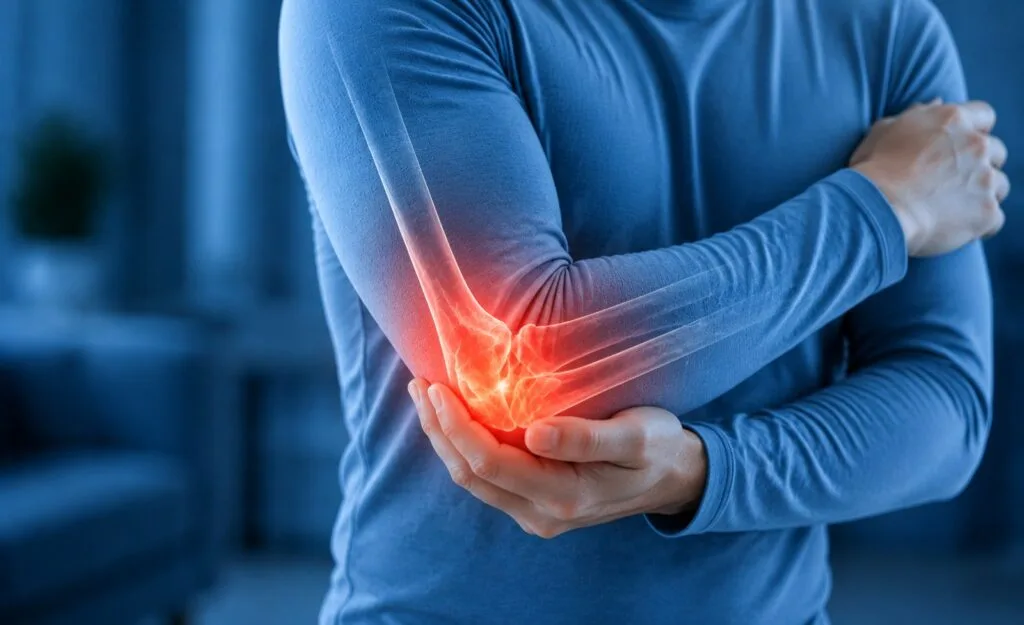
At Birmingham Physiocare Ltd on Pershore Road in Birmingham, elbow pain assessment identifies the specific structure and the specific stage of pathology before any treatment is recommended. For chronic lateral or medial epicondylitis that has not responded to previous treatment, Shockwave Therapy is the most evidence-supported intervention available directly addressing the degenerative tendon tissue that rest and standard physiotherapy cannot reach. Where diagnostic imaging is needed to confirm the extent of tendon pathology, our Musculoskeletal Ultrasound provides same-day clarity at the same appointment. Where injection therapy is clinically indicated, our Ultrasound-Guided Injection places corticosteroid precisely at the peritendinous tissue under direct imaging ; not estimated by surface anatomy.
We treat patients at our Pershore Road clinic and through our domiciliary home visit service across Birmingham, Harborne, Edgbaston, Selly Oak, Moseley, Sutton Coldfield, Solihull and the wider West Midlands.
The location of elbow pain and the activities that provoke it are the primary diagnostic indicators before clinical examination begins. Pain on the outer elbow on gripping is a different clinical entity to inner elbow pain on wrist flexion, and both are distinct from posterior elbow pain on extension or nerve-related tingling into the forearm and hand. The distinction matters; it determines which structure is being treated and which approach will work.
- Pain on the outer side of the elbow when gripping, lifting or extending the wrist
- Pain on the inner side of the elbow on wrist flexion, throwing or carrying
- Tenderness directly over the bony prominence at the lateral or medial epicondyle
- Weakness in grip strength, particularly on lifting with the arm extended
- Stiffness and aching in the elbow after activity and first thing in the morning
- Pins and needles or numbness into the forearm and ring and little fingers
- Pain at the back of the elbow on full extension or after impact
- Swelling at the tip of the elbow
- Tennis elbow (lateral epicondylitis): Degenerative change at the outer elbow origin, producing pain on gripping and lifting. The most common cause of elbow pain and a primary indication for Shockwave Therapy.
- Golfer’s elbow (medial epicondylitis): Tendinopathy at the inner elbow origin, producing pain on wrist flexion and gripping frequently associated with throwing sports and manual work.
- Cubital tunnel syndrome: Compression of the ulnar nerve at the elbow producing pins and needles into the ring and little fingers and medial elbow aching.
- Olecranon bursitis: Bursal inflammation at the tip of the elbow producing visible swelling. Confirmed by MSK Ultrasound and managed with guided aspiration or injection where indicated.
- Posterior impingement: Bony or soft tissue impingement at the back of the elbow on full extension common in throwing athletes.
- Elbow osteoarthritis: Degenerative joint change producing stiffness and pain on loading managed with manual therapy and progressive loading.
Get in touch with us
service timing ( Mon to Fri )
09 Am To 6 Pm
service timing ( Sat to Sun )
10:30 Am To 5 Pm
Our Services
What Makes Birmingham Physiocare Different?
Book Your Physiotherapy Assessment!
How We Treat Elbow Pain at Birmingham Physiocare
Shockwave Therapy
The primary treatment for chronic lateral and medial epicondylitis that has been present for more than three months and has not resolved through rest, physiotherapy or steroid injection.
Acoustic wave energy targets the degenerative extensor or flexor tendon origin directly stimulating the tissue-level healing response that chronic tendinopathy has lost. The evidence base for shockwave in lateral epicondylitis is substantial, with FDA approval and consistent clinical results.
Musculoskeletal Ultrasound
Real-time imaging of the common extensor and flexor tendons, olecranon bursa and elbow joint confirming the diagnosis and identifying the extent of tendon degeneration.
This establishes whether shockwave, injection or rehabilitation is the right treatment pathway for your specific presentation.
Ultrasound-Guided Injection
Peritendinous corticosteroid injection for lateral and medial epicondylitis and guided aspiration or injection for olecranon bursitis.
All procedures are placed under direct imaging guidance at the confirmed target structure for maximum accuracy and safety.
Manual Therapy
Specialized techniques including Mulligan Mobilisation With Movement for lateral epicondylitis, and elbow joint mobilisation for restricted range of movement.
Also includes neural mobilisation for cubital tunnel syndrome and ulnar nerve entrapment to restore nerve glide and reduce symptoms.
Exercise Rehabilitation
Progressive eccentric and isometric loading programmes for tendinopathy, grip and forearm strengthening.
Includes sport or activity-specific rehabilitation for return to throwing, racquet sports or manual work, tailored to the demands of your lifestyle.
Essential FAQs
Tennis elbow that is managed appropriately from the outset typically responds within eight to twelve weeks. The reason it recurs so consistently in patients who have received previous treatment is that the treatment addressed the symptoms without addressing the degenerative tendon tissue responsible for them. Steroid injections reduce pain temporarily but do not change the underlying tendon pathology and repeated injections without progressive loading rehabilitation accelerate tendon degeneration rather than reversing it. Shockwave Therapy followed by a progressive eccentric loading programme addresses the tissue-level cause directly the combination that produces lasting resolution rather than temporary relief.
This is the most common presentation we see for lateral epicondylitis. The injection managed the inflammatory component temporarily but the underlying degenerative change in the extensor tendon origin was not addressed, and the pain returned once the corticosteroid effect subsided. For chronic lateral epicondylitis that has already had one or more steroid injections without lasting resolution, Shockwave Therapy is the most clinically appropriate next step. It targets the degenerative tissue directly rather than managing the symptoms around it. A course of three to five shockwave sessions combined with a progressive loading programme consistently produces better long-term outcomes than further injection in this patient group.
For mild to moderate cubital tunnel syndrome, physiotherapy is the appropriate first-line treatment. Neural mobilisation of the ulnar nerve reduces mechanosensitivity and restores normal nerve movement through the cubital tunnel. Activity modification addresses the sustained elbow flexion positions that compress the nerve. Specific elbow flexor and intrinsic hand exercises maintain function and prevent further weakness. Surgery is considered when neurological deficit is progressive, when thenar and intrinsic muscle wasting is developing, or when a structured conservative programme has not produced adequate improvement over three to six months.
Significantly. Lateral epicondylitis tennis elbow and medial epicondylitis golfer's elbow involve different tendons, different muscle groups and sometimes different treatment approaches despite their similar names. Lateral epicondylitis is more common and has a stronger evidence base for shockwave therapy. Medial epicondylitis is less common, takes longer to resolve on average and is more frequently associated with nerve symptoms into the forearm due to its proximity to the ulnar nerve. The distinction also matters for injection therapy the ulnar nerve sits immediately adjacent to the medial epicondyle, making ultrasound guidance particularly important for medial elbow injections where landmark technique carries a risk of inadvertent nerve contact.
Struggling With Elbow Pain?
Get expert assessment and diagnosis at our clinic on 650 Pershore Road, B29 7NX or in the comfort of your own home across Birmingham & the West Midlands.
Instant confirmation • Free parking