

Hip Pain In Birmingham Is Not Always Where You Think It Is. We Find The Source.
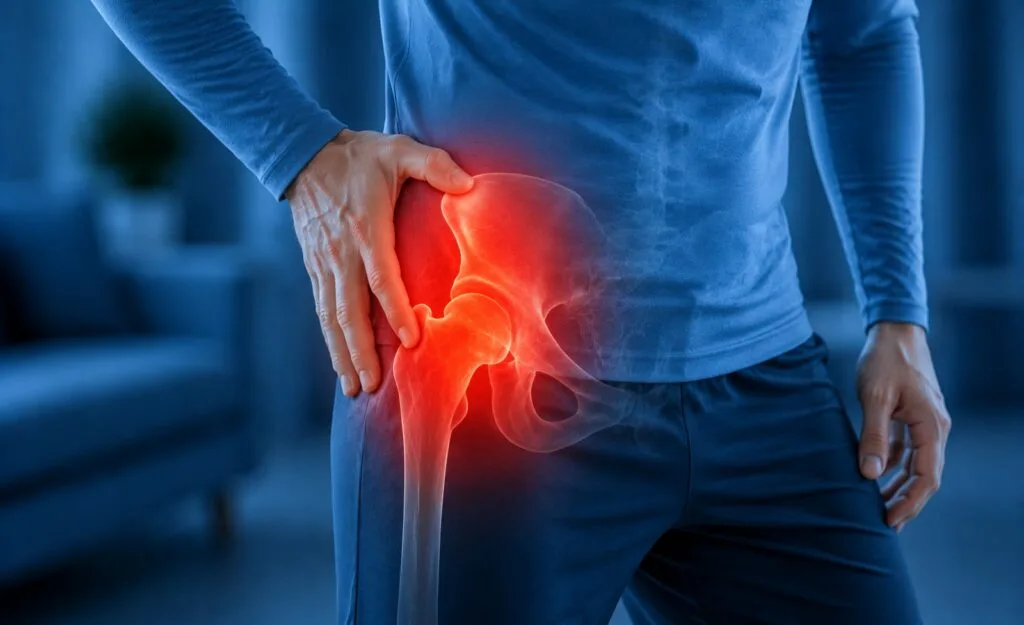
At Birmingham Physiocare Ltd on Pershore Road in Birmingham, hip pain assessment begins with establishing whether the pain is originating from the hip joint itself, the surrounding tendons and bursae, the lumbar spine or a combination of all three. Our on-site Musculoskeletal Ultrasound provides real-time imaging of the gluteal tendons, trochanteric bursa, hip flexor tendons and surrounding soft tissue differentiating between gluteal tendinopathy, bursitis and joint pathology at the same appointment as your clinical assessment. Where injection therapy is indicated, our Ultrasound-Guided Injection delivers corticosteroid precisely into the trochanteric bursa or hip joint under direct imaging. For chronic gluteal tendinopathy that has not responded to rehabilitation or injection, Shockwave Therapy addresses the degenerative tendon tissue directly.
We treat patients at our Pershore Road clinic and through our domiciliary home visit service across Birmingham, Harborne, Edgbaston, Selly Oak, Moseley, Sutton Coldfield, Solihull and the wider West Midlands.
Where the pain is located outer hip, groin, buttock or front of the thigh and what movements or positions provoke it provide the most reliable diagnostic information before examination begins. True hip joint pathology typically produces groin pain. Lateral hip pain is most commonly driven by the gluteal tendons and bursa rather than the joint. Buttock pain may originate from the hip, the lumbar spine or the deep gluteal musculature and only a thorough assessment of all three establishes which is responsible.
- Pain on the outer side of the hip, worse on walking, climbing stairs or lying on the affected side at night
- Deep groin pain on walking, squatting, pivoting or sustained hip flexion such as prolonged sitting
- Buttock pain with or without referral into the thigh or leg
- Stiffness and restricted range of movement particularly internal rotation and flexion
- Pain and clicking on the outer hip with certain movements
- Weakness and instability on single-leg activities such as stairs and stepping
- Pain that is worse after a period of rest and eases initially with movement before worsening again
- Reduced ability to cross the affected leg or sit with the hip in a crossed position
- Greater trochanteric pain syndrome and gluteal tendinopathy: Degeneration of the gluteal tendons at the outer hip, producing pain on walking and lying on your side. Confirmed by MSK Ultrasound and treated with load management, strengthening, and Shockwave Therapy.
- Trochanteric bursitis: Inflammation of the bursa overlying the greater trochanter, frequently occurring alongside tendinopathy. MSK Ultrasound confirms bursal involvement and guides accurate injection placement.
- Hip osteoarthritis: Degenerative joint change producing groin pain and stiffness in the morning. Managed with manual therapy, exercise, and intra-articular injection before surgery is considered.
- Hip labral tears: Tears of the fibrocartilaginous labrum surrounding the hip joint, producing deep groin pain on pivoting and squatting often associated with impingement in active patients.
- Hip flexor tendinopathy: Pain at the front of the hip and groin on hip flexion loading, particularly common in runners, cyclists, and those with desk-based occupations.
- Referred pain from the lumbar spine: Nerve root pathology from the lower back that refers pain into the groin and hip region, mimicking true hip joint issues and requiring assessment of both areas.
Get in touch with us
service timing ( Mon to Fri )
09 Am To 6 Pm
service timing ( Sat to Sun )
10:30 Am To 5 Pm
Our Services
What Makes Birmingham Physiocare Different?
Book Your Physiotherapy Assessment!
How We Treat Hip Pain at Birmingham Physiocare
Musculoskeletal Ultrasound
Same-day imaging of the gluteal tendons, trochanteric bursa, hip flexor tendons and surrounding soft tissue confirming the diagnosis.
This allows for differentiating between tendinopathy, bursitis and joint pathology, determining the appropriate treatment pathway before any intervention begins.
Shockwave Therapy
For chronic gluteal tendinopathy that has not responded to load management, rehabilitation or injection therapy.
Direct acoustic energy to the degenerative tendon tissue at the trochanteric insertion stimulating the cellular repair mechanism that persistent tendinopathy has lost.
Ultrasound-Guided Injection
Corticosteroid injection into the trochanteric bursa for bursitis and intra-articular injection for hip osteoarthritis both placed under direct imaging guidance to the confirmed target structure.
Greater trochanteric bursitis injection is a particularly compelling case for ultrasound guidance given the depth and variability of the bursal location between patients.
Manual Therapy
Hip joint mobilisation for osteoarthritis and restricted range of movement, soft tissue release for hip flexor and external rotator tightness.
Includes lumbar assessment and treatment where referred pain from the spine is contributing to the hip symptom picture.
Exercise Rehabilitation
Progressive gluteal strengthening, hip abductor and external rotator loading, and pelvic stability training.
Includes load management for tendinopathy structured around your diagnosis, your current capacity and a clear return-to-activity progression.
Essential FAQs
In clinical practice this distinction is less clear-cut than it sounds greater trochanteric pain syndrome almost always involves both gluteal tendinopathy and some degree of bursal irritation simultaneously. The bursa sits directly beneath the gluteal tendons and is frequently compressed and irritated by the same loading patterns that degenerate the tendon. The important distinction is not bursa versus tendon but the severity and chronicity of the presentation which determines whether rehabilitation alone, injection therapy or Shockwave Therapy is the appropriate primary intervention. MSK Ultrasound at Birmingham Physiocare establishes both the tendon and bursal status at the same appointment, informing which approach is most appropriate for your specific presentation.
Very possibly and this is one of the most common diagnostic errors we encounter at Birmingham Physiocare. True hip joint arthritis produces pain predominantly in the groin and anterior hip on walking, rising from a chair and climbing stairs because the joint itself sits deep in the groin, not on the outer hip. Pain on the outer side of the hip is far more commonly driven by the gluteal tendons and trochanteric bursa than by the joint. Without imaging to confirm the diagnosis, lateral hip pain is frequently attributed to arthritis simply because the patient is of the age where arthritis is expected. An MSK Ultrasound at your first appointment establishes clearly which structure is responsible.
Yes and the evidence from the 2025 APTA Clinical Practice Guidelines on hip osteoarthritis strongly supports exercise therapy and physiotherapy as the most effective conservative interventions for hip OA. Strengthening the muscles that support and offload the hip joint, maintaining joint range of movement through manual therapy, and managing symptoms through intra-articular injection when inflammation is significantly limiting function all contribute to meaningful improvements in pain and daily function. Many patients who receive structured physiotherapy either delay surgical intervention significantly or find their symptoms sufficiently managed without it.
Potentially either and the answer matters for treatment. The lumbar spine and the hip share overlapping referral patterns. L2 and L3 nerve root pathology from the lumbar spine consistently refers pain into the groin and anterior thigh in a distribution that mimics hip joint pathology precisely. Conversely, true hip joint disease can produce buttock and posterior thigh symptoms that appear to originate from the lumbar spine. Distinguishing between lumbar referred pain and true hip pathology requires a thorough clinical assessment of both regions examining the lumbar spine, the hip joint, the surrounding soft tissue and the neurological status of the lower limb all conducted at your first appointment at Birmingham Physiocare.
Struggling With Hip Pain?
Get expert assessment and diagnosis at our clinic on 650 Pershore Road, B29 7NX or in the comfort of your own home across Birmingham & the West Midlands.
Instant confirmation • Free parking